Showing posts with label Advocacy. Show all posts

Thursday, February 4, 2016

Slaves or Siblings? Shaking the Downside Up!

This post is an assigned response to Paul Louis Metzger’s post, The Crucified God Confronts Gendercide in which he engages Elizabeth Gerhardt and her book The Cross and Gendercide: A Theological Response to Global Violence Against Women and Girls. As I have worked my way through this doctoral program, my eyes have been opened in a rather uncomfortable way to the terrible injustices of the past that contributed to our white dominant culture lifestyle and also to the hidden oppressions that surround us still—including racism in its various incarnations from slavery to mass incarceration, the genocide of Native Americans, human trafficking (especially of women and girls) in addition to the gendercidal war on girls, to name a few. So much objectification—treating people created in the image of God as though they were mere objects in the way of our expansive greed. How could the Lord continue to delay his return to judge the earth? He is for us. It is his mercy that has stayed his hand (2 Peter 3:9). 
Much of what we have read has been rightfully heavy and heartbreaking. Jesus knows something about that as he carried the full weight of our sin on the cross where his heart was broken at our inhuman injustice to each other. He is for us. Even though we don’t deserve it. 
Dr. Metzger, invoking Luther’s theology, writes,
"The theology of the cross that gives rise to this doctrine of justification by faith removes the idols of self-justification/works righteousness. As we ascend to Christ in faith because of the outpouring of God’s love into our hearts (Romans 5:5), we are free to descend to our neighbor in love." (See Luther’s early Reformation treatise, “Freedom of a Christian”) There is no need for self-concern. Like God who is for us, we are now free to exist for others, especially those who are marginalized. It follows from God’s glorious revelation hidden in Christ’s humble and marginalized human state that we will find God revealed especially in the margins among the oppressed. 

What a powerful passage. Now because of the work of Christ, we no longer have to think about ourselves—because he is for us in ways better than we could ever manage. Being free of the drive to satisfy the boundless greed of the unregenerate self (James 4:1-3) we are free to finally serve others in love.

I recently posted an article on my pastoral blog from a message based on Colossians 3:22-4:1 entitled, Whatever: Our Work Belongs to God which addressed the idea of “descending to our neighbor in love.” Because of the transforming love of Christ, all our relationships should be transformed as well. Written into the specific culture of the Greco-Roman world, it describes a passage that is no less revolutionary today. It pushes everyone’s buttons—wives, husbands, children, parents, slaves, and masters alike. These last few verses speak to the relationship in Colossae between masters and bondservants (slaves) in the household and in the church. I would like to use part of that post here as well.
22  Bondservants, 
       obey in everything
           those who are your earthly masters, 
       not by way of eye-service,
                              as people-pleasers,
       but with sincerity of heart,
                                         fearing the Lord. 
23 Whatever you do, work heartily, 
                                           as for the Lord
                and not for men,
                    24 knowing that from the Lord 
                    you will receive the inheritance as your reward. 
                    You are serving        the Lord Christ. 
25 For the wrongdoer will be paid back
     for the wrong he has done,
                   and there is no partiality.
4:1 Masters,
         treat your bondservants
                                       justly and fairly,
         knowing that you also have
 a Master in heaven.

While the New Testament is not primarily about social justice advocacy, we do see the inside-out working of the gospel, quickly impacting the economic and spiritual structures of evil. Paul’s exorcism of a demonized slave girl led her masters to stir up quite a bit of trouble in Philippi,

But when her owners saw that their hope of gain was gone, they seized Paul and Silas and dragged them into the marketplace before the rulers. And when they had brought them to the magistrates, they said, “These men are Jews, and they are disturbing our city. They advocate customs that are not lawful for us as Romans to accept or practice.
“The crowd joined in attacking them, and the magistrates tore the garments off them and gave orders to beat them with rods. And when they had inflicted many blows upon them, they threw them into prison, ordering the jailer to keep them safely. Having received this order, he put them into the inner prison and fastened their feet in the stocks.” (Acts 16:19-24)

In the following chapter of Acts, we see the early followers of Jesus being described by jealous men, “These men who have turned the world upside down have come here also, and Jason has received them, and they are all acting against the decrees of Caesar, saying that there is another king, Jesus.” (Acts 17:6-7) Were they trying to turn the world upside down? Probably not… but the gospel, when given free rein, has a way of shaking the downside up.

One more such incident occurred in Ephesus when the idol-making guilds rioted because so many people were turning to Christ that it was really hurting their business (Acts 19:21-41). Followers of Christ lived their lives with new hope and purpose and they didn’t buy silver idols (even as a hedge against the volatile market), or books on magic, nor did their teachings allow them to use those trafficked to the temples (prostitutes). Instead, they rescued infant girls that had been exposed (left to die in the elements). Turning from self-serving and power-hungry magic and idols of objectification, they turned the world upside down. Believers burned their own books of magic, not because they were required to do so, but because they rejected their premise and goal and would not wish that kind of bondage on anyone else. They had found something better—more life-giving, more hope-filled, more love-saturated—serving Jesus Christ by caring for others. Have we been so changed?

I have been moved recently by Paul’s short letter to a master named Philemon, who lived in Colossae, advocating on behalf of an escaped slave and thief (Onesimus) who had later come to faith under Paul’s ministry. We should not consider the passage in Colossians 3, about bondservants and masters, without reading the backstory to these commands. It can be found in Philemon 1:8-20. After initial greetings, Paul gets right to the point,

      Accordingly, though I am bold enough in Christ to command you to do what is required, yet for love's sake I prefer to appeal to you—I, Paul, an old man and now a prisoner also for Christ Jesus— I appeal to you for my child, Onesimus, whose father I became in my imprisonment. (Formerly he was useless to you, but now he is indeed useful to you and to me.)  I am sending him back to you, sending my very heart. I would have been glad to keep him with me, in order that he might serve me on your behalf during my imprisonment for the gospel, but I preferred to do nothing without your consent in order that your goodness might not be by compulsion but of your own accord. For this perhaps is why he was parted from you for a while, that you might have him back forever, no longer as a bondservant but more than a bondservant, as a beloved brother—especially to me, but how much more to you, both in the flesh and in the Lord.
     So if you consider me your partner, receive him as you would receive me. If he has wronged you at all, or owes you anything, charge that to my account.  I, Paul, write this with my own hand: I will repay it—to say nothing of your owing me even your own self. Yes, brother, I want some benefit from you in the Lord. Refresh my heart in Christ.

Paul didn’t write a sweeping condemnation of the cultural practice of slavery but planted the seed for a new way of looking at it. Paul sent Onesimus back to Philemon, but made it clear that he should treat him as more than a slave, even as a beloved brother (v.16), receiving him as he would receive Paul himself (v.17). Paul graciously used all his relational capital to bring reconciliation between master and slave. Paul worked within the cultural context, but through his advocacy using subversive kingdom values, the Spirit brought a profound change throughout the Christian community. It is amazing to me that Onesimus the returned slave (with Tychicus) probably delivered this letter along with letters to the Colossians, Laodiceans, and Ephesians. He had indeed become useful (his name means “useful”).

I hope you can see how this pun-filled letter (the Greek text contains several) of directions to a Christian in Colossae completely turned the slave-based economy upside-down by Paul’s simple, yet profound, identification of the slave Onesimus as “beloved brother”, “my child”, and “my very heart.” He made a very strong case for Onesimus to be set free to return and assist him in the ministry but gave Philemon the freedom to do the right thing without being compelled by Paul. The love of Christ took care of that!

Let me finish this post by turning my own customs upside down and giving the final words to Dr. Metzger,
“As I come to understand more fully the radical good news that God is for us (pro nobis) and not against us, even though we were once his enemies, I will give myself more fully to the care of others as a response of gratitude to God and free exercise of the divine love.
   May God increase the church’s confidence in God’s radical, gracious love…   
   May we, the church, not stand aloof as we hear the cry of the victims of violence and sexual abuse…
   May we enter their nightmare with the hope-filled advocacy grounded in faith in the all-powerful, gracious, and costly love of the crucified and risen Jesus. Our Jesus is their victor.”

Tuesday, January 26, 2016

Refugees and the Pesky Law of Hospitality

I must confess that I am concerned about the Syrian refugee crisis. But perhaps not for the same reason as most. While this issue has become quite a political football, I think the issue of Syrian refugees is deeper than the rhetoric.

Many fear that allowing unvetted refugees into the country will put us at risk of terrorist attacks by hostile individuals pretending to be refugees. Perhaps so, but you can’t vet where there is no infrastructure to accomplish it. In my snarky sense of humor, I like to say that "vetting is for farm animals and family pets, not for people." While I am convinced that we, as followers of Jesus, need to be different and extend as much love and care to authentic refugees as we can, I am not convinced that bringing them to the USA is always the right step for them or for us. Setting aside national security concerns, it may still not be a good idea.

What about That Verse?
Ironically, a common Bible passage used to address the refugee crisis has nothing to do with refugees, but with resident aliens. Leviticus 19:33-34 says,
“When a stranger sojourns with you in your land, you shall not do him wrong. You shall treat the stranger who sojourns with you as the native among you, and you shall love him as yourself, for you were strangers in the land of Egypt: I am the Lord your God.

Similarly, “sojourning” refers to a temporary stay, not to permanent immigration. Visitors should be treated as citizens, but this verse is not about refugees. There are better texts for that, including:
  • The Golden Rule (Matthew 7:12);
  • The Good Samaritan (Luke 10:22-37);
  • The call of true religion to provide care for widows and orphans (Ex. 22:22; Deut. 10:18; 1:29; James 1:27); and,
  • Passages about doing good (Matt. 5:16; 1 Timothy 6:17-19; Romans 2:9-11; 12:20-21; Galatians 6:9-10, etc.) and,
  • Showing hospitality (e.g., 1 Peter 4:8-10; Romans 12:12-14).
“Do not neglect to show hospitality to strangers,
for thereby some have entertained angels unawares.” (Hebrews 13:2)
Having said that, once refugees are settled in our country, we will need to treat them like we treat each other... or better than that. However, I am not convinced that we are prepared to do this.

What Then Should We Do?
We should begin to pray for the Holy Spirit to release a newfound love for those who have historically been considered enemies, and with it the wisdom we need to bring honor to Christ by serving the "least of these." Here are some of my suggestions for ways that we can help Middle-Eastern refugees, along with my concerns. You can judge for yourselves whether I prayed about it before sharing them.

1. We can support sacrificial relief efforts by the church in Turkey.
Why not support those who are helping in Turkey (as my colleague Mark Nicklas shared in his blog post, Refugees), where it is both geographically near and culturally similar to what they have left behind? There is no government assistance in Turkey; help comes from a marginalized church. It is the formerly Muslim converts to Christianity who are helping the refugees, and who, after exhausting their own resources, are willing to go door to door begging on behalf of the destitute. Are we willing to go to such lengths of sacrificial humility for refugees? Are we willing to help the helpers? I hope so.

2. We could use existing regional refugee camps more effectively.
While no one wants to live in a “camp”, perhaps they could still be used more intentionally with international resources to resettle refugees in Jordan and Saudi Arabia if they do not want to specifically assimilate into European or American cultures. To take someone who has already been brutally displaced, perhaps having lost family members to violence, and plop them down in a culture for which they are not prepared is not helpful and may, in fact, produce further marginalization. It seems this approach might better care for them and would take their preferences into consideration. If we could work for an acceptable peace in Syria within the next 1-3 years, this would be an even better option, but I doubt that the power players in the region have the will to do it.

3. We should prepare refugees for the culture shock of immigration.
In our pluralistic, politically correct, tolerance-oriented behavior, are we actually marginalizing immigrants by not teaching them our culture? Soon Ang and Linn Van Dyne, in Handbook of Cultural Intelligence (2008), suggest that we are doing just that, and caution those engaging with immigrants,
"When there is a large cultural distance, it is necessary to train immigrants to understand the consequences of their immigration, and to become somewhat culturally intelligent. In my opinion, it is irresponsible to give permanent visas to people who do not understand the local culture. It is also undesirable to use the "leave them alone" policy in "respecting" immigrant cultures. Immigrant cultures need to change, and people must become culturally intelligent or stay on the margins of society. People who are culturally intelligent zero in on aspects of culture that are different and respond appropriately."[1]

Suppose a refugee family wants to come to Europe or the USA, and we accept them. In that case, their cultural law of hospitality may lead them to believe that we, as the givers of hospitality, are responsible for providing for their needs on an ongoing basis. Are we really willing to send that message? One Oregon church has Iraqi refugees coming in every day seeking financial help. In our country, we have become used to institutionalizing assistance to the place where we now call them “entitlements”. However, this doesn’t relieve us of our responsibility and calling to care personally. We need to understand that we have very different views on hospitality. In the West, permanent house guests are not culturally appropriate except as fodder for late-night comedians.

4. We ought to ask refugees what they want and why they want it.
Even if we are prepared to accept refugees and mass migrants into our society, are they open to such a change in cultural values, or are they motivated by a false promise of affluence? Jesus asked Bartimaeus, the blind man, “What do you want me to do for you?” Doesn’t that seem like a “Captain Obvious” type of question? Of course, a blind man wants his sight restored…isn’t it that simple? No, not really. Bartimaeus was a beggar and likely had been one for quite some time. His cry to Jesus for mercy could merely be a request for a generous gift of alms (cash) to support himself in his current condition. Or it could be that he wanted Jesus to heal his eyes, but that would require him to stop being a beggar. He would have to get an education, work a job, etc. Was he willing to do all this? The question Jesus asked gave the blind man the chance to decide for himself whether he wanted to remain as he was or if he wanted to face the frightening responsibility of things being different. 

What does all this have to do with refugees? Two things: First, refugees should be told what they will face if they immigrate to America, and should be asked if they really want to move here, given our very different cultural values. Secondly, we need to honestly ask ourselves whether we are willing to be personally involved in their lives for the long haul, "to the end of the line" or not. 

5. We must be personally involved, no matter how scary it may be.
If we decide to allow refugees to come to America (and we will), we must be personally involved. That would be true hospitality indeed! How can we help?
  • We can work to help them begin being educated about our culture (both values and systems) before they get here, so that they are not further marginalized once they arrive. Some of their culturally accepted behaviors will land them in prison here, just as some of our behaviors would land us in jail where they come from. We don’t want them to be ghettoized in addition to being transplant-traumatized already.
  • We can specifically sponsor families (as families, small groups, or as whole churches) so that they have relational advocates to help them through the adjustment process. We can get involved on many levels, including helping them to learn English, teaching “culturally appropriate” driving skills, finding housing, navigating utility hookup issues, shopping, as well as helping with our healthcare and legal systems, etc. If help comes only through the government, it produces an institutional dependence that is more hurt than help. If help comes relationally through the love of Christ, then it will set the immigrant up to win, to be a contributing member of the community. 
  • We can do our best to welcome them into our lives and allow them to teach us about their culture and invite them to make use of the gifts and talents which they bring with them…for the common good (Jeremiah 29:7).
If we are not willing to be personally involved with a refugee family over the long haul, then we should not bring them here. However, they are probably coming anyway, whether it is in their best interest or not, so how can we make the best of it for everyone involved?

Jesus shows us the way if we are bold enough to follow. Will we show ourselves to be the lambs or the wolves?

And he said to them, “The harvest is plentiful, but the laborers are few. Therefore pray earnestly to the Lord of the harvest to send out laborers into his harvest. Go your way; behold, I am sending you out as lambs in the midst of wolves. (Luke 10:2-3)

[i] Soon Ang and Linn Van Dyne, eds. Handbook of Cultural Intelligence: Theory, Measurement, and Applications (Armank, NY: M.E. Sharpe, Inc., 2008), xii.

Tuesday, December 15, 2015

Driving in the Fog: An Advocacy Metaphor

Recently, as I was driving to work, I was surprised by the fog between the towns along the way. After a long, dry, often hot summer, it reminded me that the weather is changing, and one aspect of fall driving in the Northwest is fog. We hear a lot about the hazards of winter driving, but honestly, when we have a snow or ice “event,” most people around here just stay home. What you hear less about is the danger of driving in fog. Experts suggest several things we can do to improve safety when we have to drive through fog. After reading a number of these lists of safety tips and driving directions, I have discerned a metaphor that may help us as advocates and cross-cultural ambassadors for Christ.

Advocating for/with others is in many ways like driving in the fog.

In any given situation, we may not know everyone’s backstory or cultural conditioning. It also seems that we rarely hear both sides of the story or systematically analyze all the contributing factors. Our understanding of the situation is actually far more limited than we realize. Sometimes, when we might not know what to do, we follow others who seem to have a clue. Unfortunately, they might be just as blind as we are. In such situations, our hurry to do something might cause more damage than not doing something. Let’s take a look at the common safety suggestions for driving in the fog, but let’s think about how our advocacy could benefit from such an approach.

Slow Down

The consensus “#1 fog-driving safety tip” is to slow down. As the range of our vision decreases, so does the time we have to react and adjust to curves, cows, and other cars. We will also need to keep an eye on the speedometer since “we may lose visual cues as to how fast we are going.” This is true for ministry leaders as well as for driving. In seasons of cultural fog and reduced understanding of what is going on and what lies ahead, we need to slow down. Just as driving into a ditch or running into another car won’t get us where we need to be any faster, so too our rushing ahead with our plans without asking the hard theological “Why-type” questions will not save us time in the long run…and may be quite dangerous.  If we are going too fast, we risk collisions—even with those going the same direction, who might have been our greatest allies.
    “The heart of the righteous ponders how to answer,
         but the mouth of the wicked pours out evil things.”
(Proverbs 15:28)

    “Before destruction a man's heart is haughty,
         but humility comes before honor.
    If one gives an answer before he hears,
         it is his folly and shame…
    The one who states his case first seems right,
         until the other comes and examines him.”
(Proverbs 18:12-13, 17)
Use Our (Low-Beam) Headlights

It is important to make sure your headlights are on in foggy weather for two reasons. First, we want to see where we are going. Second, we want others to be able to avoid running into us. However, our temptation when visibility is limited is to turn on the high-beam lights in hopes of seeing farther. However, with low, thick fog, this will actually impair our vision as the light is reflected back off the fog into our eyes. High beams also make it harder for other cars to see where they are going. The low-beam headlights will not reflect as much glare back into our eyes, nor blind other drivers.

This high-beam temptation is like when we think too much of ourselves and our opinions during a time when we do not have a clear picture of our context or the path forward. Such confusing times come to us all, perhaps more frequently than we would like to admit. However, when we begin to consistently apply the Word of God to the situation, we should be able to make slow, steady progress. The Bible teaches that we are not to think too highly of ourselves…for pride, like high beams, can tend to make us blind to potential dangers as well as endanger others. Instead, we are challenged to consider others more highly than ourselves, to bear one another’s burdens, and to follow the low-beam attitude of Jesus Christ as described in Philippians 2:3-11,

Do nothing from selfish ambition or conceit, but in humility count others more significant than yourselves. Let each of you look not only to his own interests, but also to the interests of others. Have this mind among yourselves, which is yours in Christ Jesus, who, though he was in the form of God, did not count equality with God a thing to be grasped, but emptied himself, by taking the form of a servant, being born in the likeness of men. And being found in human form, he humbled himself by becoming obedient to the point of death, even death on a cross. Therefore God has highly exalted him and bestowed on him the name that is above every name, so that at the name of Jesus every knee should bow, in heaven and on earth and under the earth, and every tongue confess that Jesus Christ is Lord, to the glory of God the Father.
Use Fog Lights… If You Have Them

Some vehicles are equipped with special fog lights that are low to the ground and are designed to better reveal the lines on the road and not add to the glare in your eyes. Such lights help us to find our way not by seeing a mile down the road, but by helping us to see the next few yards. King David wrote, “Your word is a lamp to my feet and a light to my path.” (Psalm 119:105) The type of oil lamp this refers to doesn’t provide light to see far away, but gives illumination for us to see where to place our feet and take our next steps. In times of fog, we need to stay in the Bible, allowing it to illuminate not only our path but the condition of our heart (James 1:22-25; Heb. 12:12-13).
Follow others, but not too closely

Just as drivers in foggy conditions might “be tempted to drive more closely to the car in front of you to keep it in sight” the advocate can begin to rely on the experience and methodology of another, the preacher can become reliant on podcasts of other preachers instead of developing a listening ear for the contextual clues the Lord gives when we slow down and listen. It helps to have mentors and inspirational people who speak into our lives and ministries, but following too closely without being able to see the road for ourselves may end up with both of us in the ditch (Matt. 15:14).
There is one person to follow closely in our fog, and that is the Lord himself. As we draw near in prayer and in reading his Word, the Bible, he will lead us and turn the darkness to light.

And I will lead the blind
    in a way that they do not know,
in paths that they have not known
    I will guide them.
I will turn the darkness before them into light,
    the rough places into level ground.
These are the things I do,
    and I do not forsake them. (Isaiah 42:16)

Turn On the Wipers and Defroster

Always use your windshield wipers and defrosters in fog to help you see and reduce glare from the headlamps of oncoming vehicles. Sometimes we don’t notice that our vision is not as clear as we think until the lights of another car reveal it. Running the defroster will clear the fog on the inside of the window, and the wipers will help clear the outside. In this part of the country, the wind usually scours out the fog, but it is in times of cold and calm (or atmospheric inversion) that the fog thickens. Similarly, a kingdom advocate should regularly allow the Holy Spirit to blow the internal fog away and wipe the outside in honest confession and repentance in response to the Scriptures. It is the internal fog that makes us ineffective and unfruitful.

For this very reason, make every effort to supplement your faith with virtue, and virtue with knowledge, and knowledge with self-control, and self-control with steadfastness, and steadfastness with godliness, and godliness with brotherly affection, and brotherly affection with love. For if these qualities are yours and are increasing, they keep you from being ineffective or unfruitful in the knowledge of our Lord Jesus Christ. For whoever lacks these qualities is so nearsighted that he is blind, having forgotten that he was cleansed from his former sins. (2 Peter 1:5-9)
Roll Down the Windows

Some say that if you roll down the windows at slower speeds, you will be able to hear what’s happening around you (if you turn your music down), which is important when your visibility is reduced. If you hear any suspicious noises, such as squealing or crunching, safely brake and pull to the side of the road. If you have a passenger, rolling down their window may help them better see the fog line and edge of the road. It is all about using all your senses to help stay on the road and avoid hitting others who may have stopped. As ministers and advocates, we will need to be spiritually attuned, "watching in prayer" and not merely mentally engaged (Eph. 6:18-19; 1 Peter 5:7-9).

Follow the Fog Line (the Right-Side Pavement Line)

When visibility is reduced, use the white line on the right-hand side of the road to guide you. It is natural for our eyes to be drawn towards the lights of oncoming cars, but we must resist this, for it impairs our vision once they pass, and it will tend to draw us closer to the oncoming traffic. The fog line is on the right side of the road for just such a time as this. When we are unsure of the future, remember the clear boundaries for our lives and ministries that the Lord has given to us. There are lots of Biblical lists that are very clear, and then there is Colossians 3:17 (look it up), which, if understood, basically says that Jesus’ attitude, character, and teaching should be the fog line of our life. The question is not, “Where did that car in front of me go?” but “Where does that white line say I should go?” 

“Be watchful, stand firm in the faith, act like men, be strong. 
 Let all that you do be done in love.” (1 Cor. 16:13-14)

Don’t Stop On the Road

One of the most annoying things about winter driving in Portland is that when it snows or there is ice on the road, hundreds of people abandon their cars right in the middle of the major roads. This is crazy, right? At least in the brightness of our light snow, you can usually see the stopped cars, but in the dark fog, stopping on the road can be disastrous, resulting in being rear-ended and causing a multi-vehicle accident. Some of the largest and most tragic freeway pileups happen in fog or smoke. Experts suggest that if we have to stop that we pull over to a safe area, completely off the road, and turn on our hazard lights.
“And let us not grow weary of doing good, 
for in due season we will reap, 
                          if we do not give up.” (Gal. 6:9) 

In advocacy, as in all ministries, we should not just quit and walk away for that will potentially harm us and others. Better to consider the needs of others and get out of the way and wait until we can, in faith, move forward again (Gal. 6:2).


Turn On Your Hazard Lights

If we need to pull off the road, multiple sources remind us to “turn on your emergency flashers or hazard lights.” We need to do this “so other drivers will know you are parked and won’t try to follow you.” There are times when we just need to be honest and say, “Don’t follow me…I have no idea where I am going!” Such an attitude is much better than leading other people into a ditch.

It is not a cultural value for ministers to admit that they can’t see and need to “pull over” due to either the fog of changing culture, the dust of swirling circumstances, or the blinding smoke of systemic burnout. It may take courage to pull over and turn on the hazard lights, but it is an act of kindness and is helpful to others. When was the last time we stopped and let Jesus advocate on our behalf?
My little children, I am writing these things to you so that you may not sin. But if anyone does sin, we have an advocate with the Father, Jesus Christ the righteous. (1 John 2:1)

No Road Rage

Has impatience or hatred crept into our advocacy? This can easily happen. When we are dealing with people who have been objectified or oppressed, we may begin to desire the worst for their oppressors; yet if our love for one person turns into hate for another, then we are in a blinding fog and don’t realize our own danger.
“But whoever hates his brother is in the darkness and walks in the darkness, and does not know where he is going, because the darkness has blinded his eyes.” (1 John 2:11)

Few things could be scarier than to continue in such self-deception as that which Jesus called out in the Laodicean church, “For you say, I am rich, I have prospered, and I need nothing, not realizing that you are wretched, pitiable, poor, blind, and naked.” (Rev. 3:17) Instead, may we cry out like Bartimaeus, “Rabbi, let me recover my sight.” (Mark 10:51).

Bringing It Home

Simple advice for driving in the fog is remarkably applicable to the life of an advocate, whether personal, governmental, through a non-profit agency, or even in a church setting. Go slow, assume that you see less clearly than you think you do, communicate well with others both about what you are doing and what you are not doing, ask for help, don't neglect the spiritual dimension, stick to your core values, and don’t be afraid to pull over and wait for your vision to clear.

Thursday, December 3, 2015

Darwin, Dawkins, & the Darkness in my Soul

This post is an assigned response (in a course on Christian Advocacy) to Social Darwinism, Richard Dawkins, and Down syndrome by Paul Louis Metzger 

In his post, Dr. Metzger treads dangerously close to the swamp of misunderstanding by writing semi-favorably about Darwin and Dawkins. He could be misunderstood by those on either side depending on their biases. However, in the process, he makes one very good point. He writes,
Why all this fuss on the need to understand Darwin and Dawkins on their own terms?
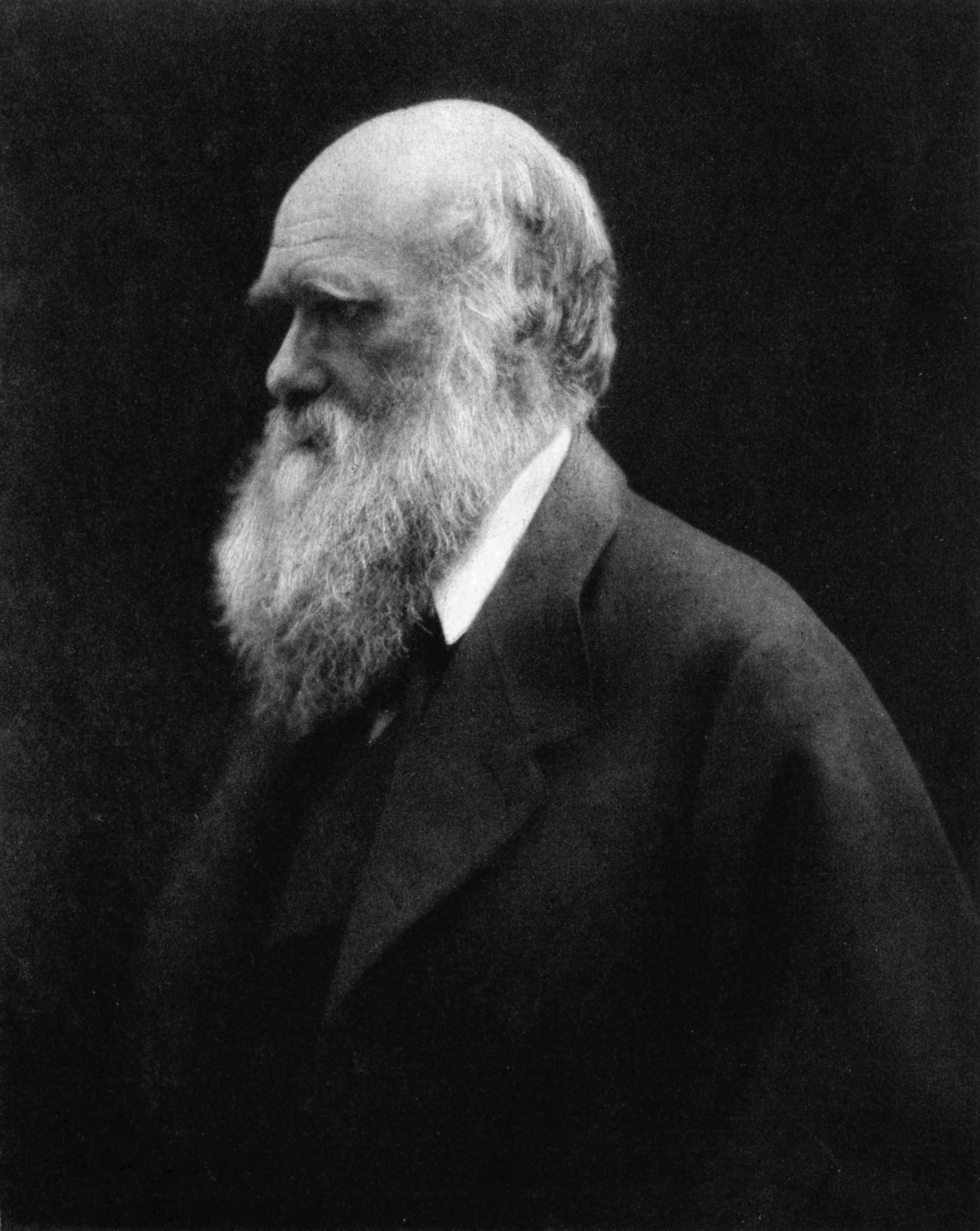
Charles Darwin
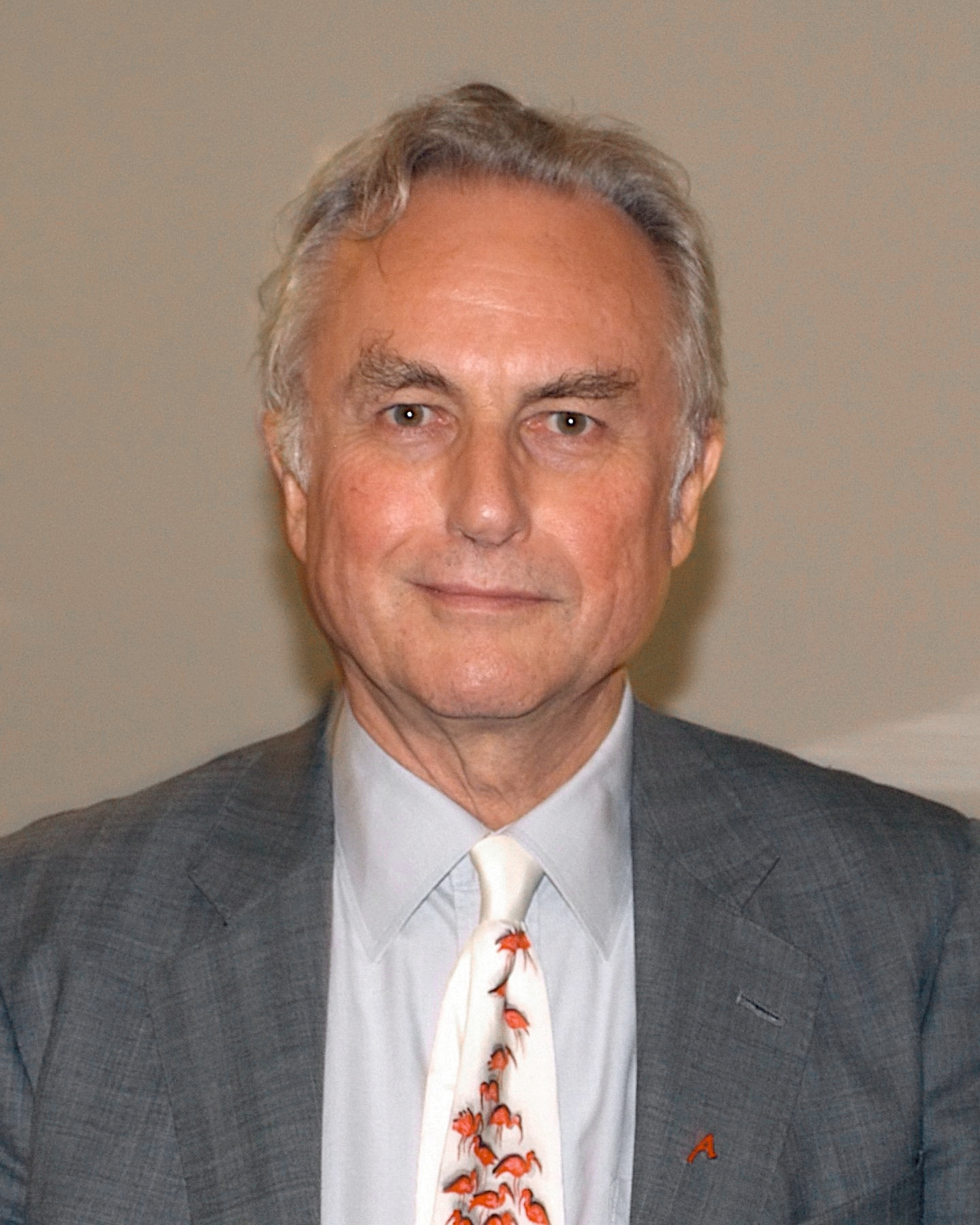
Generally, conservative Christians do not show much love for Darwin or Dawkins. Still, we need to practice the Golden Rule (Matthew 7:12) and do to others what we would want them to do to us. We should try and interpret their claims in keeping with their intended aims rather than with how we might wish to interpret them for partisan purposes, just like we would want others to interpret our positions as we intend them. Take for example the accusations and misperceptions of others concerning the early church, where the church’s critics falsely claimed that Christians were engaged in cannibalism and orgies in their love feasts. Such accusations and misunderstandings hurt the church’s witness. Conservative Christians who take seriously the Golden Rule yet who are critical of Social Darwinian thought should be especially careful about not distorting the positions of others, including an atheist like Dawkins. After all, Christians committed to biblical absolutes don’t believe anything goes for the sake of the survival of our particular Christian species.

Do we interpret the claims of those with whom we disagree “in keeping with their intended aims” instead of how they best fit into our talking points? I hope so. Metzger’s appeal to “the Golden Rule” carries more weight than we might want to acknowledge. As with the freedom of speech and the freedom of religion, there needs to be equality under this rule. We need to exegete their work within their actual context no more, no less.

While I disagree with many of Darwin and Dawkins’ presuppositions, conditions, and conclusions I see no need to demonize them. We should live by an ethic such as that tweeted recently by Glenn Burris, "Never express hate on behalf of the God of love."
I would do well to consider their stories, to listen to them in their own words, to hear their own stated purposes. In addition, I am thankful for the added understanding of their positions that Dr. Metzger's post supplies… but in the end, Darwin’s theory and available evidence fail to adequately answer questions about the transitions of “life from non-life” and of one species to another (macroevolution). Dawkins’ utilitarian approach to morality is also inadequate in caring for the marginalized and powerless…for whom a utilitarian ethic—no matter its root—will always bring oppression and further powerlessness.

I appreciate my friend Becca McMartin’s comment on the original blog,
While Dawkins' utilitarian standard of happiness sounds good at first, it seems to create more problems than it solves. What is happiness? How is it judged? Who decided? Is it possible to predict the amount of happiness and act preemptively? Is happiness really the point of life? There are no easy answers.
It seems that...
Richard Dawkins
  • One man replaces God the Creator with time and chance and hopes for the best. 
  • The other replaces God the Judge with his own subjective matrix of happiness and suffering and judges as he feels fit. 
Both academic considerations are tragic and have led to untold suffering through the application of their ideas to policies and processes that have real-world consequences. Yet, to be honest, are we any different? Do we not all too frequently do the same things in our own hearts and lives? Do our closet motivations and classroom ideas come with significant collateral damage for others?
  • Do we call God Creator and then treat resources—both environmental and human—as though they were our own possessions?
  • Do we speak of a Righteous Judge and a Coming King, yet sacrifice the happiness and increase the suffering of others for the sake of our own comfort and convenience? We are inherently selfish, and apart from a completely hedonistic motive might settle for a utilitarian approach that validates our collective ego and those in power rather than truly valuing everyone. But to set aside our own happiness for that of another is indeed a challenge.
I hope not, but know that too often this is the case. In our hearts, we turn away from God and seek to build a framework to sustain us in our darkness and rebellion instead of abiding in the love of God. Sometimes it is in a macro (very public) way, and other times it is in a micro (private and internal) way. No matter, the darkness is shockingly real. 

Be appalled, O heavens, at this;
    be shocked, be utterly desolate, declares the Lord,
for my people have committed two evils:
they have forsaken me,
    the fountain of living waters,
and hewed out cisterns for themselves,
    broken cisterns that can hold no water.
(Jeremiah 2:12-14)

Yes, I am thankful for this opportunity to better hear others’ thoughts in their own words. But even more, I am thankful for the opportunity they provide for me to search my heart for where I manifest such fallen thinking and actions…so that I might repent of my hewing and seek God who alone is good to all.

The Lord is gracious and merciful,
    slow to anger and abounding in steadfast love.
The Lord is good to all,
    and his mercy is over all that he has made…
The Lord is righteous in all his ways
    and kind in all his works.
(Psalm 14:8-9, 17)

And without faith it is impossible to please him,
                for whoever would draw near to God 
must believe that he exists
              and that he rewards those who seek him. (Hebrews 11:6)

Tuesday, November 17, 2015

"Don’t Get Cocky!"

This post is an assigned response to Dr. Paul Louis Metzger’s blog post, Unfinished Business, which focuses on the ongoing need to address civil rights, racial reconciliation, and Martin Luther King’s prophetic vision of the “beloved community.”

I remember when the first Star Wars[1] movie was released in 1977. It was in the spring of my 9th-grade year. At that time the special effects were unparalleled— such as the light sabers and famous “jump to light speed” that awed us all, and brought us back to the theater again and again (VCRs and DVDs didn’t exist). Where I lived in Oregon, the theater had entered into a strange agreement to continue showing Star Wars until revenue dropped below a certain point. If memory serves me, it was three years later when the sequel, The Empire Strikes Back (1980), was released and the first movie was still showing at that theater. It was the movie's longest continuous run anywhere. 

The movie was about a community of creatures (from various races and species) fighting for their very survival against the powerful monolithic structures of evil found in the Empire. While Star Wars was not an example of King’s non-violent approach to “beloved community”, the movie’s hero, Jedi-in-training Luke Skywalker, was instructed by Masters Obi-wan and Yoda that the dark side of the force took control by giving in to fear, anger, and hatred…leading to “suffering” (e.g., violent and vengeful attacks). The same danger exists for us today in working for social justice that existed for Rev. King, the temptation to give in to hate and fear, to be overcome by the “dark side” that is the native language of a fallen world. 

Do you remember watching Star Wars for the first time and celebrating with Luke after he successfully destroyed one of the TIE fighters that was attacking their spaceship (the Millennium Falcon)? Then Han Solo (Harrison Ford) quickly brought him back to the unfinished business at hand, “Great kid! Don’t get cocky.” It seems that great strides were made back in the day of King and the civil rights movement…but that doesn’t mean the battle is over. There is still too much fear, hate, and suffering. Yet we must not lose the vision of the beloved community, As Dr. Metzger writes,
So, what does the beloved community look like, and what is the unfinished business to which we must attend in light of King’s life and legacy? The beloved community is a community of love and justice and peace and equality that breaks through the chains of racism and classism and abuses of various kinds. Beloved community requires that we connect the dots of those things that destroy beloved community and come together in solidarity to consume those dots and connections, just as King did.

If we are going to connect the dots" we need spiritual wisdom and understanding. This was the Apostle Paul's prayer for the church in Colossae. We need precise and correct knowledge of God's will for society not just for individuals. We need spiritual wisdom from above not the "dark side" (James 3:13-18) if we are to use our knowledge fruitfully. Finally, we need understanding (Greek synesis) which enables us to put the pieces together into a cohesive whole; to treat the causes, not just the symptoms, and to incite thankfulness, not riots.

And so, from the day we heard, we have not ceased to pray for you, asking that you may be filled with the knowledge of his will in all spiritual wisdom and understanding, so as to walk in a manner worthy of the Lord, fully pleasing to him, bearing fruit in every good work and increasing in the knowledge of God. (Colossians 1:9-10)

We live in a world of turmoil and oppression. We see increased racial tension in America,
Created by Jean Jullien in
response to Paris attacks, 2015.
some legitimate conflicts over racism, other incidents are less legitimate and are being pimped to the benefit of one side or the other. Islamic terrorism has been especially vicious in recent months with the most recent being the heinous attacks in Paris on November 13-14, 2015. In this attack, the current death toll is 136, with another 33 wounded. This is not the beloved community. Nor can such a beloved community be established by military force alone. It will take the power of God expressed in sacrificial love.

So what will we do? Will we change who we are at the core of our being? Will we grow weary of trying to understand each other, will we quit looking for ways to work together with others? Will we respond in unkind ways to the unkind or will we be able to stay "on target" with the love of God no matter how much it costs us?

I am prompted to consider that I will need God’s help. Thankfully he not only doesn’t grow weary but he gives power to the faint and powerless (Isaiah 40:28-29). And, strengthened by the Holy Spirit we are able to obey the repeated New Testament command to not grow weary in our mission to do good for others no matter how tough it gets. Here are a few such scriptures…
For the one who sows to his own flesh will from the flesh reap corruption, but the one who sows to the Spirit will from the Spirit reap eternal life. And let us not grow weary of doing good, for in due season we will reap, if we do not give up. So then, as we have opportunity, let us do good to everyone, and especially to those who are of the household of faith. (Galatians 6:8-10)

As for you, brothers, do not grow weary in doing good. (2 Thessalonians 3:13)

Consider him who endured from sinners such hostility against himself, so that you may not grow weary or fainthearted. In your struggle against sin you have not yet resisted to the point of shedding your blood. (Hebrews 12:3-4)

Martin Luther King’s beloved community cannot be fully realized on earth until we who are the church can engage others in light of Jesus’ own voluntary humiliation on our behalf.  As it is written,
“So if there is any encouragement in Christ, any comfort from love, any participation in the Spirit, any affection and sympathy, complete my joy by being of the same mind, having the same love, being in full accord and of one mind. Do nothing from selfish ambition or conceit, but in humility count others more significant than yourselves.” (Philippians 2:1-3)

“…for you know that the testing of your faith produces steadfastness. And let steadfastness have its full effect, that you may be perfect and complete, lacking in nothing.” (James 1:3-5)

As a new installment of the Star Wars movie franchise is scheduled to be released in December, some 38 ½ years after the first one, perhaps it will remind us to not depend upon the successes of the past, nor the methods and power of the world to carry us into the future. Perhaps we will once again band together to build the blessed kingdom of Christ, the beloved community indeed. Perhaps we should start by expressing gratitude to those fighting the good fight of love as Dr. Metzger suggests, "We must show gratitude to the often thankless labors of love of mothers who serve their families so sacrificially, fathering their children, holding down multiple jobs, teaching their children the value of hard work and how to stretch a dollar and stretch a hug to heal a family and a community."

Don’t get cocky! We have unfinished business.


[1] This first film was later retitled Star Wars Episode IV: A New Hope