Showing posts with label Community. Show all posts

Tuesday, November 10, 2015

The Beauty of Red Cups

Every Christmas, there seems to be at least one retailer who forbids employees to wish customers a “Merry Christmas” or one municipality that removes a manger scene and as a result, bears the brunt of Christians venting a year’s worth of frustration at being marginalized by our post-Christendom culture. This year is no exception.

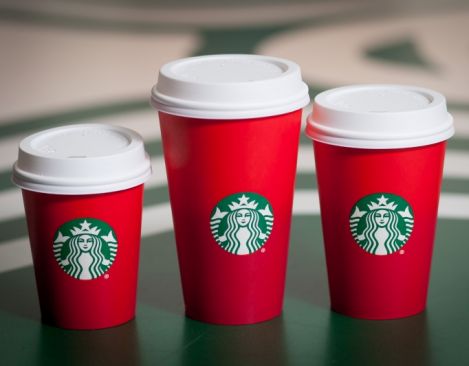
A normally chilly November has featured a rather heated debate, even a firestorm of resistance to Starbucks’ rollout of their plain red cups for the holidays this year. Many have taken to social media to proclaim their dissatisfaction. I have remarked to several people that this argument is misguided and actually counter-productive to the cause of Christ. I would like to go on record and say that I like the relatively simple yet elegant red cups marking the Christmas season at Starbucks…for several reasons.

I was encouraged to find that the Starbucks news blog post, dated November 1, 2015, shows an astute cultural awareness that is unfortunately lost on many American Christians who think that all cultures should revolve around them, using their language and symbols. The Starbucks cups appear after Halloween and signal the addition of special holiday drinks to their menu. While Starbucks might be trying to spin this conflict in its favor, I sensed a sincerity that needs to be heard. And that is the problem, isn’t it? Frequent readers of my blogs will recognize that this is a regular theme in my writing. Any time we respond without actually listening to the viewpoint of another (no matter which side of the argument we are on) we reveal ourselves to be unwise.

Why Did They Do It?
Jeffrey Fields, Starbucks' vice president of Design & Content is quoted in the post and I want you to be able to read his words for yourself,
Taking a cue from customers who have been doodling designs on cups for years (Starbucks held a contest to support this creativity), this year’s design is another way Starbucks is inviting customers to create their own stories with a red cup that mimics a blank canvas.  
“In the past, we have told stories with our holiday cups designs,” said Fields. “This year we wanted to usher in the holidays with a purity of design that welcomes all of our stories.”
In the nearly two decades since the first red Starbucks cup, the company has grown from 1,400 stores in a handful of countries to more than 23,000 stores in 68 markets around the world.
“Starbucks has become a place of sanctuary during the holidays,” he said. “We’re embracing the simplicity and the quietness of it. It’s a more open way to usher in the holiday.”
Creating a culture of belonging, inclusion, and diversity is one of the core values of Starbucks, and each year during the holidays the company aims to bring customers an experience that inspires the spirit of the season. Starbucks will continue to embrace and welcome customers from all backgrounds and religions in our stores around the world.[1]

While I have liked the special cups of Christmases past (I happily own some) I love the idea of the cup being a symbolic "canvas" where we can create our own stories in community with others. Past years’ cups have been almost too cluttered with seasonal themes (hope, peace, love, giving) and symbols—trees, snowflakes, ornaments, reindeer, gifts, etc. All are placed there with a marketing connection to increasing sales. None of these things are really outwardly Christian, so it is hard to see this as a credible attack on Christmas by Starbucks. The biggest danger to the western church is not the “bleak midwinter” of Christ-less secularism, but it might just be consumerism. In which case, a simple cup might point us back in the right direction… toward open engagement with others in time spent, stories shared, and all done around an open table.

A Place of Sanctuary

Are our homes a sanctuary?
Are our homes and churches known as places of sanctuary, or are they filled, in turn, with bustling acrimony or bored apathy? Not only am I impressed with the reasoning behind the red cups, but I am also personally convicted when Mr. Fields says, “Starbucks has become a place of sanctuary during the holidays,” he said. “We’re embracing the simplicity and the quietness of it. It’s a more open way to usher in the holiday.” As I have written previously (Rethinking “Don’t Talk to Strangers!”), I rarely sit in a Starbucks without speaking to a stranger, making a new friend, working on a sermon, mentoring other Christians, or just enjoying being with family and friends. I see others doing likewise. Why are we the church not more of a “sanctuary”? Why is it that we are rarely described by words like “simplicity” and “quietness”? And for those who consider “holiday” a trigger word, it literally means “holy day” so if we truly considered a day holy how would we treat others on it? I have apologized to the baristas in my local Starbucks because they have to work on Christmas, but they say they love sharing the day with the crew and the people who come in are happier than normal.

Back to the Red Cups.
What does red mean? Is it not rife with biblical symbolism? Certainly, it reminds me of the “blood of Christ” that was shed on a Roman cross to wash away our sins. But perhaps more seasonally appropriate, red is the color of humanity for Adam was made from the red dust of the ground. It is at Christmas that God the Son left the culture of heaven behind to become fully human so that he might redeem us, become the perfect advocate for us, and set us free from our slavery to the fear of death (Hebrews 2:14-18). If we are going to engage the world like Jesus did, we will have to start with humbling ourselves, not grasping or demanding (Philippians 2:1-11).
I don’t agree with everything Starbucks does nor with all the values that they profess…like when they spell my name wrong. Yes, coffee drinks are often too expensive, though I usually drink the less expensive iced coffee. Having said that, Starbucks has been a blessing to the church as a “third space” in the community to talk, listen, laugh, study, and share with believers and those who don’t—even without reindeer on their cups.

Finally, I don’t need to fib about my name to force baristas to write "Merry Christmas" on my cup and then have to call out “Merry Christmas, your tall non-fat iced coffee with mocha is ready!” I am more interested in talking to them while they take my order and make my coffee…treating them as fully human and even as friends. So hopefully, when I wish them a "Merry Christmas!", and I will, they will believe I mean it and agree that it has been merry indeed.

Sunday, December 22, 2013

His Light at Christmas (Part 3: Being Plugged In To His Power!)

In the first two posts of this mini-series, His Light at Christmas, we have looked at different aspects of how Christmas lights may stand as a metaphor for our life and work as the church, a community of ambassadors for Christ.

Part 1: Being Lights For His Glory—In response to his light…
·         We Should Be Visible Lights
·         We Should Be Unblinking Lights

Part 2: Being Conformed to His Image—In response to his likeness…
·         We Should Shine as Attractive Lights, Not as an Obnoxious Glare
·         We Should Shine Together as Different Colored Lights in Harmony

This week we will finish our series, in response to his commission, by considering the source of our light, the power we need to be effective witnesses in a dark world.

We are His Line—Being Plugged Into His Power!
God not only created us, and currently sustains us as part of his creation, but he has made us his children through Christ (John 1). We who were once not his people (1 Peter 2:10) have been made family and joint heirs with Christ (Romans 8:17).

Christmas Lights Need To Be Plugged Into A Power Source
Scripture says that Jesus is "upholding all things by the word of His power." Further, Isaiah 8:20 says that if we are not plugged into the Word of God, there is no light in us. We don't have the power to shine as lights unless we are plugged in. Our power is found in His Word, as made alive in our hearts by His Spirit.

In Part 2 of The Hobbit trilogy of movies, The Desolation of Smaug, the evil one (Sauron) says to Gandalf the wizard, “There is no light that can defeat the dark!” Just as that line is actually not in Tolkien’s book, it is not in the Bible either. The darkness has not overcome the light of Christ (John 1:5) which enlightens everyone (John 1:9). While it is true that some will choose the darkness over the revealing character of Jesus’ light (John 3:20), all who believe in Christ are no longer bound by darkness (John 12:46)!

The light of God’s glory will uphold us if we hold onto it. It will not only brighten the room, and lift our mood, but it changes the world—one act of justice at a time. Isaiah 58:8-12 proclaims,
"Then your light will break forth like the dawn, and your healing will quickly appear; then your righteousness will go before you, and the glory of the Lord will be your rear guard. Then you will call, and the Lord will answer; you will cry for help, and he will say: Here am I. If you do away with the yoke of oppression, with the pointing finger and malicious talk, and if you spend yourselves in behalf of the hungry and satisfy the needs of the oppressed, then your light will rise in the darkness, and your night will become like the noonday. The Lord will guide you always; he will satisfy your needs in a sun‑scorched land and will strengthen your frame. You will be like a well‑watered garden, like a spring whose waters never fail. Your people will rebuild the ancient ruins and will raise up the age‑old foundations; you will be called Repairer of Broken Walls, Restorer of Streets with Dwellings."

Christmas Lights Come In Strings
Not only do we need to acknowledge our power source, but also the fact that we are not solitary lights. We have not been redeemed to work alone; rather, we are put into a wonderful string of lights called the Church. 1 John 1:7 says, "But if we walk in the light as He is in the light, we have fellowship with one another, and the blood of Jesus cleanses us from all sin."

If we are walking in the light, we have fellowship with one another. That means "a sharing in common." But what do we all have in common? What binds a diverse and dissimilar group of people together? The message (light) and the Master (power source) are not the only common elements. Our mission is one of restoring community! We are blood-bought, and adopted sons who call God our Father (Romans 8:15). We are part of one family!

"Thy word is a lamp unto my feet and a light unto my path… The entrance of Thy word gives light . . ." (Psalm 119:105)

Christmas Lights Are Meant To Be Strung

Strings of lights were not made to be plugged in and left in one big clump, they look much better when they are strung on the tree or the house.

Remember how Jesus told the disciples to remain in Jerusalem until they received power from on high (Acts 1:8)? They obeyed this "plugged-in" part of the command well but failed the "being strung" part of the mission where they were supposed to leave Jerusalem to take the message to Judea, Samaria, and the end of the earth until Saul’s persecution was unleashed in Acts 7 and they were forced "out of the package". Is it possible that we too have dwelt too long in sight of Jerusalem, and are too comfortable in our warm close-knit little bundle of Christmas lights? It is time for us to venture out into the dark cold winter and do what we have been empowered to do…shine the love of God in the community of the saints while engaging our cultures for Christ!

We share Christ, and we share the product of Christ working in and through us—light to a darkened world! It is the spiritual light that brings forth spiritual fruit just as the sun brings forth natural fruit. Let's shine forth His light as a glorious, unblinking, multi-colored, plugged-in string of holy Christmas lights on a mission this year. The eyewitnesses' account in Scripture is clear. May our witness be clear as well, so that we might bear fruit unto God's glory. 

"I am the vine; you are the branches. If a man remains in me and I in him, he will bear much fruit; apart from me you can do nothing... If you remain in me and my words remain in you, ask whatever you wish, and it will be given you. This is to my Father's glory, that you bear much fruit, showing yourselves to be my disciples." (John 15:5,7,8)

            Merry Christmas! From one part of his string to another!


Christmas Carol: “I Cannot Tell”

I cannot tell why He whom angels worship,
Should set His love upon the sons of men,
Or why, as Shepherd, He should seek the wanderers,
To bring them back, they know not how or when.
But this I know, that He was born of Mary
When Bethlehem’s manger was His only home,
And that He lived at Nazareth and labored,
And so the Savior, Savior of the world is come.

I cannot tell how silently He suffered,
As with His peace He graced this place of tears,
Or how His heart upon the cross was broken,
The crown of pain to three and thirty years.
But this I know, He heals the brokenhearted,
And stays our sin, and calms our lurking fear,
And lifts the burden from the heavy laden,
For yet the Savior, Savior of the world is here.

I cannot tell how He will win the nations,
How He will claim His earthly heritage,
How satisfy the needs and aspirations
Of East and West, of sinner and of sage.
But this I know, all flesh shall see His glory,
And He shall reap the harvest He has sown,
And some glad day His sun shall shine in splendor
When He the Savior, Savior of the world is known.

I cannot tell how all the lands shall worship,
When, at His bidding, every storm is stilled,
Or who can say how great the jubilation
When all the hearts of men with love are filled.
But this I know, the skies will thrill with rapture,
And myriad, myriad human voices sing,
And earth to Heaven, and Heaven to earth, will answer:
At last the Savior, Savior of the world is King!

By William Young Fullerton (1857-1932) set to the Irish folk tune Londonderry Air.

Saturday, June 22, 2013

Gentrification of a Baseball Stadium

          Portland is a city that has been transformed by gentrification. While a complex issue that is as highly nuanced as it is emotionally charged, gentrification is perhaps better described than defined as it was in a classic PBS “Point of View” article on the documentary Flag Wars:
Although there is not a clear-cut technical definition of gentrification, it is characterized by several changes.
Demographics: An increase in median income, a decline in the proportion of racial minorities, and a reduction in household size, as low-income families are replaced by young singles and couples.
Real Estate Markets: Large increases in rents and home prices, increases in the number of evictions, conversion of rental units to ownership (condos) and new development of luxury housing.
Land Use: A decline in industrial uses, an increase in office or multimedia uses, the development of live-work "lofts" and high-end housing, retail, and restaurants.
Culture and Character: New ideas about what is desirable and attractive, including standards (either informal or legal) for architecture, landscaping, public behavior, noise, and nuisance. [1]

A number of once run-down and dangerous neighborhoods have been taken over by those trendy urban re-development people with mixed results. When the wealthy and powerful move in and take advantage of the disadvantaged and voiceless former residents. It is true that property values climb rapidly as undervalued properties are acquired and flipped by investors, but increased tax assessments often force long-time residents from their homes, churches and community without their having a voice in the process. It has been the heavy hammer of social injustice. As young, hip, wealthy, mostly white people crowded out the existing low-income and often ethnic communities, these changes also impacted America’s pastime…sports injustice.  

We should have seen it coming. Re-development always bites someone. Our class A Portland Rockies baseball team was moved out when Civic Stadium was redeveloped into PGE Park in preparation for the arrival of the AAA Portland Beavers. It really was a very nice, family-friendly, baseball venue in the historic heart of the city. But the developers were not through. In Portland, soccer is hip, soccer is cool, and soccer is supported by the downtown power elite. A new MLS franchise was used to push a very popular and family-friendly minor league franchise out of the city. The deal was supposed to include building a new baseball stadium elsewhere but in the face of obstacles that part of the agreement was abandoned. PGE Park was remodeled again into the soccer-and-football-only JELD-WEN Field and the Beavers were relocated to a former spring training stadium in Tucson, AZ then later moved again to El Paso, TX. It has now been three years since the Portland Timbers Soccer team forced our AAA Portland Beavers baseball team out of their stadium home. While not a hater, I must point out that the Timbers are the darling team of the gentrification crowd.

            I recently attended the home opener our new Class A minor league baseball team, the Hillsboro Hops. I was absolutely amazed to sit in a crowd of people who seemed to be finding their voice again. It was like a huge family barbeque celebrating the return of baseball yet without the constriction of the old venue with no parking. At the same time, the new stadium is currently not serviced by transit after games due to its “being on a low ridership route.” I know what that really means. It means that “since you baseball fans are not urban hipster gentrified microbrew swilling soccer zombies… so we feel no need to work with your kind of people.” Even without Portland-based development cooperation baseball is back. Despite the traffic, and having to work out the new venue issues, it seemed very liberating experience for young and old alike as they rediscovered the game they love and made new friends that somehow seemed like old ones in the process. I know I did.


Picture 1 Double Rainbow at Hops' Opener
            Sure there may be larger crowds of MAX-riding, chanting hip white people occupying Timbers’ games, and Portland may be featured on national television for it. I’m happy for them. But is the change better? Perhaps it is. But it was painful nonetheless. Yet out of pain and a community of shared sports suffering there came a beautiful evening in June, where all the storms and clouds only served to make it more beautiful. One sports writer commented that “if the Hops home opener was any better it would have had a double rainbow…and it did.” I agree and took a picture of it. With the light show of a sweet sunset in the west and black clouds with rainbows in the south, it’s almost as if God joined in the celebration.  
 
Picture 2 Hops' Opener Under the Lights
            It was a stirring time for this baseball fan, and a symbolic one as well. But after seeing the celebration of a community of hard-working families regaining their voice, while encouraging an international group of young ball players on a cool Monday night in June, I began to long for a time when the dislocated poor and ethnic communities of Portland might enjoy the same sense of homecoming and more, for their suffering goes longer and deeper than three years. Until then, they are welcome to come to Hillsboro and watch minor-league baseball with me.

[1]  http://www.pbs.org/pov/flagwars/special_gentrification.php