Showing posts with label Gentrification. Show all posts

Tuesday, September 30, 2014

Moving Day Part 1 “Packing Up”

Photo by Kadarius Seegars on Unsplash
As I get ready to move on to a new focus in my cultural engagement blogging, I thought I might pack up some things to share, and perhaps stir my readers up by way of reminder.

Over the summer, in a loose-knit series of blog posts, I explored the concept of unity and disunity in our society and how we as the church should be committed to tearing down the walls that we allow to divide us so that we can better represent as the body of Christ on earth. Some of this disunity is tied to the literal building and tearing down of walls and the movements of ethnic peoples from one land to another, and some of the disunity is because of our own pride and sense of entitlement.

Starting with Some Elbow Room? (7/15/14) I asked questions like, “Why do we always seem to push others out when we move in (whoever the “we” may be)? Why do we spend so much energy "clearing the land" to build our own kingdoms?” and encouraged Christian congregations to stop competing with each other as well as trying to be self-sufficient and start working together. I concluded that post with the challenge,
If we need to be moving someone, let it be moving ourselves closer to each other relationally, linking arms and hearts, keeping in step with the Spirit rather than the flesh (Gal. 5). Listen to one another, pray with one another, and be friends with one another. Then we may see God move in gentle power in our midst... and have to move out into the yard because the house isn't big enough for everyone.

I followed that with Dust in the Wind: The Ever-Changing Dance (7/22/14) in which I talked about the fascinating way that ethnic populations have always been moving and shifting, not as a way to excuse the gentrification of traditionally non-white urban communities, but as an encouragement for us to consider how our policies and actions affect others. Though this shift is unavoidable we should not force it on others.
“Sudden heavy-handed shifts in demographics can either bury the existing community under the weight of new arrivals (think our current crisis on the Southern Border) or scatter that community to the wind (think N & NE Portland)…  

The question facing us is how to respond. Will we embrace the shift and adapt to the new ministry opportunities that the wind has delivered to our doorstep (or to whose doorstep we are delivered)? Will we flee to new lands (California or Bust!) to begin again? Or like some die-hard Dust-Bowlers will we simply live in the basement of what remains and slowly watch our family die of dust pneumonia?

More recently I looked at how we view the “property lines” in our own lives in Psalm 16:5-8 "Pleasant Places" (8/5/14). This passage alludes to the tribal inheritances allocated in the Book of Joshua, but then applies the idea of inheritance not to a place but to a person—the Lord himself. But out of this story, we see our collective responsibility to help every “tribe” to gain its inheritance.
“Who has yet to receive a piece of the pie? Who has not been given a place at the table? For such as these those of us who have access to economic and educational resources should look for ways to leverage them not for our own benefit, but for the benefit of those who don’t have the same options available to them.”

So how do we do this? Trust God and do what he is doing. Our natural response is to take the easy way rather than the hard one. The mission of God is greater than the appearance of “the neighborhood”. Everything God does has a purpose and though it might not be what we want, it is for the good. So do we lament what we see and complain our days away or do lean in and listen more closely to the voice of the Spirit? Do we run from the sound of suffering or do we run towards the battle for the good of the oppressed?
Yesterday I wrote to my son that some of the imagery in Isaiah 62 seemed a little like the rebuilding that must happen after a terrorist attack.  
Go through, go through the gates,
Clear the way for the people;
Build up, build up the highway,
Remove the stones, lift up a standard over the peoples.
Behold, the Lord has proclaimed to the end of the earth,
Say to the daughter of Zion, “Lo, your salvation comes;
Behold His reward is with Him, and His recompense before Him.”
(Isaiah 62:10-11)
There was an attack, a disaster, a tragedy. I wonder if we are willing to move, coming alongside to help our new neighbors overwhelmed with the debris of a violently fallen world. Or would we rather use the remote control to change over to the Cartoon Network?

In the incarnation, Jesus chose the hard way of becoming human to rescue us in accordance with the redemptive plan of God. The least we can do is follow his lead going out from comfort, convenience, and status quo, to take up the missional calling he has given to us.

So Jesus also suffered outside the gate in order to sanctify the people through his own blood. Therefore let us go to him outside the camp and bear the reproach he endured. For here we have no lasting city, but we seek the city that is to come. Through him then let us continually offer up a sacrifice of praise to God, that is, the fruit of lips that acknowledge his name. Do not neglect to do good and to share what you have, for such sacrifices are pleasing to God. (Hebrews 13:12-16)

Just because we “have no lasting city” here doesn’t mean we can’t leave a lasting mark!

Tuesday, July 22, 2014

Dust in the Wind: The Ever-Changing Dance


“The wind blows where it wishes, and you hear its sound,
but you do not know where it comes from
or where it goes.” (John 3:8)

Have you ever watched the wind blow sand at the beach? The beach is not static, but dynamic, in constant motion. It can form intricate little ripples in the sand and move great dunes. Then the waves and tides work to erase the wind’s Etch-a-sketch and seasonally either add more sand or take it away in stormy bites. What does this coastal observation have to do with gentrification (urban renewal) or its opposite ghettofication (urban decay)? Neighborhoods are always in a state of renewal or decay…just ask a real estate agent. There is a lifecycle to a neighborhood. As much as we complain about it, people are always on the move as are the larger ethnic or socio-economic groups they may be a part. We are very much a part of the great dance, dust in the winds, or change.

As we have begun to awaken to the tragedy of gentrification in some of our trendier urban areas perhaps we should put such population movements in historical perspective.

Surf Stacking,
photo by Greg Dueker
In Britain, the native tribes were defeated by the Romans in 55 bc and then saw their lands progressively occupied and their leaders Romanized for about 400 years. Once Rome came under pressure in other areas and withdrew from Britain, other peoples invaded displacing their predecessors with a vengeance. Wave after overwhelming wave, one gentrification following another. Native Britons forced west into what is now Wales, by successive invasions of the Germanic Angles, Saxons, and Jutes along with regular raids by the Vikings of Denmark and Norway. Later the now mingled Anglo-Saxons were conquered by the Normans in 1066. The Norman kings tried to unify the nation by controlling Wales in the West and Scotland in the North, and Ireland as well. Interestingly, in addition to many foreigners immigrating Great Britain, some recent demographic articles suggest that today there are Irish, Scottish, and Welsh people migrating into the traditionally English areas instead of away from them. This reverse migration is not unique to England.

When I studied historical theology in seminary, one book I read (The New Penguin Atlas of Medieval History) contained maps depicting the ethnic/national migrations in Medieval Europe and the Mediterranean basin (ad 500-1500) at about a 40 year refresh-rate. If you flip the pages quickly you can see the people groups in constant motion…like the sand on the beach. Fascinating...some kingdoms/people come and go in a blink of the eye, while others move across the landscape like a bulldozer (e.g., the Turks).
 
So why did the much maligned European immigrants come to this country by the millions? Most were fleeing wars and economic hardships in their homelands.  The constant wars ravaged the land and lack of room to expand may have contributed to their desire to immigrate. Trivia question: What country of origin represents the largest group of immigrants to the USA? You might be surprised. They predominately moved north and west and settled vast stretches of new country. See the interesting map below,

 
The first commandment God gave was to fill the earth and subdue it (Gen. 1:28; 9:1).

“Be fruitful and multiply and fill the earth and subdue it, and have dominion over the fish of the sea and over the birds of the heavens and over every living thing that moves on the earth.”
This command was repeated by Noah to his sons after the flood. Not too many generations later, the citizens of Babel had other ideas. They decided that they wouldn’t move anymore and would instead dig in their heels, put down roots, and build a city thus making a name for themselves. Thus began the trans-historical, economic/political/religious opposition to the kingdom of God in the world.

So am I arguing for gentrification on the basis that it is normal, or even biblical? No I am not. I am not advocating for gentrification any more than I would cheer its opposite, ghettofication. I certainly don’t want to be party to imposing my power upon another population for my own gain. However, shift happens…as much as existing communities hate it. Keeping with the sand metaphor, gentrification can at times seem more like the Dust Bowl of the Great Depression. Sudden heavy-handed shifts in demographics can either bury the existing community under the weight of new arrivals (think our current crisis on the Southern Border) or scatter that community to the wind (think N & NE Portland).
 
The question facing us is how to respond. Will we embrace shift and adapt to the new ministry opportunities that the wind has delivered to our doorstep (or to whose doorstep we are delivered)? Will we flee to new lands (California or Bust!) to begin again? Or like some die-hard Dust-Bowlers will we simply live in the basement of what remains and slowly watch our family die of dust pneumonia?
 
I hope we can choose the first option together and see the beauty of what God is doing in our midst!


Photo by Zach Dischner

Tuesday, July 15, 2014

Some Elbow Room?

This post is a response to an article written by Dr. Paul Metzger entitled, “The Gentrified Church—Paved with Good Intentions?”. In discussing the current and historic waves of gentrification in North and Northeast Portland, he calls the church to account for its racial and cultural heavy-handedness.

“Young white entrepreneurs are moving in, including church planters. Should we call this progress? The answer to this question depends on one’s background, experience, and perspective.
To many, gentrification means urban renewal, which for them spells progress. To others, it signifies cultural regress.”

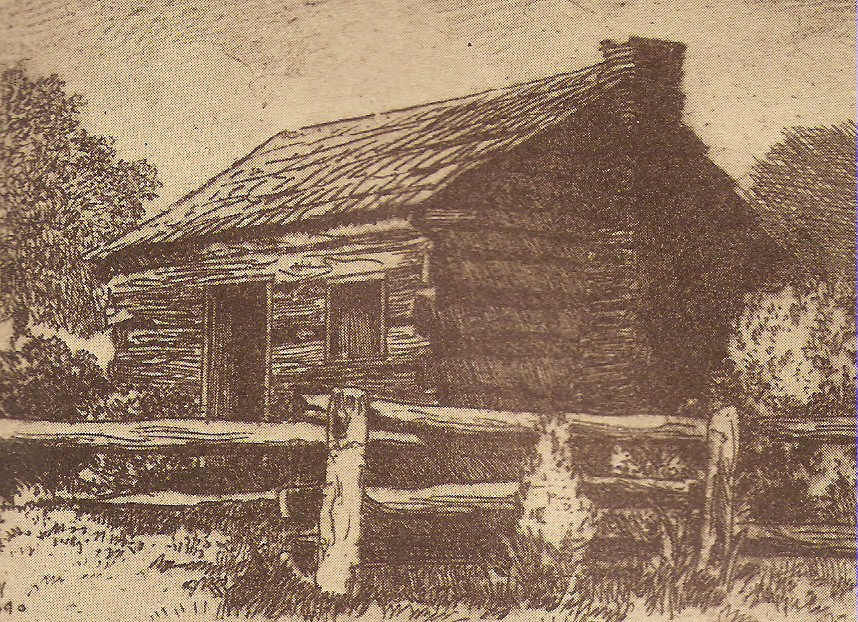
Why do we always seem to push others out when we move in (who ever the “we” may be)? Why do we spend so much energy "clearing the land" to build our own kingdoms? Or like Abraham Lincoln’s father, who when he could see the smoke of a neighbor’s fire had to move on to find “some elbow room”? Does this include clearing the land of its people so that we can remake it in our own image? It has happened all too often, in fact it seems the lot of fallen man to do this. But shouldn't the redeemed person be more relational than that?

Too often in our discussions of racial injustices and oppression there is no clear-cut plan for moving forward in repentance and reconciliation. It seems like an endless cycle of listening to the same things over and over again with no relational reconciliation allowed to bear fruit. However, Metzger’s statement lays the necessary groundwork for ministry reconciliation to take place,
“Given the history of gentrification and segregation in Portland, true unity will include the following: white pastors learning the history of racism, segregation and gentrification; if they don’t understand Portland’s history, they will repeat it, no matter how good their intentions.”
But it is not enough to get to know the history of the city and its dismal track record on race relations; we must get to know each other as brothers and sisters of equal standing in the Kingdom of God. As our God is relational in the core of his being, so our ministries cannot reflect the humble glory of God in our city without becoming more relational than then have been in the past.

No one group has the answer, but the answer God brings for the city is found in Christian congregations learning to be one in love and mutual respect.  It is not to our credit to posture and play some not-so-subtle king-of-the-hill game. No one congregation or house church is THE church of Portland, or Beaverton, or Gresham, but merely one part of it. It is to our glory to honor another more highly than ourselves because biblical glory is always given, never claimed. As church leaders it is past time for us to start giving more honor to our fellow followers of Christ—those who have for many years served without much recognition or financial backing—who are men and women from whom we have much to learn.

Recently I attended a special prayer service for a friend facing a terrible cancer diagnosis. With very little notice, more than 40 people showed up to pray for this dear pastor’s wife (in her backyard since the house was not large enough). There were people there from at least four different congregations, including the two largest churches in Beaverton. Yet it did not seem like a gathering of churches, but simply the one church gathering to pray for a sick family member. There was no posturing, no competition between one congregation’s 50-somethings and another’s 20-somethings, between those from the small church-plant and those from the mega-churches, but rather deep gut-wrenching compassion and contending in prayer by all alike as the tears flowed freely.

I have great hope for this woman’s healing (and the others facing similar situations) and for the healing of the divided church in our cities. It is when there is a crisis or suffering that we see that the church in our community is larger than our smaller gatherings. I have observed that in a hospital’s Surgery or ICU waiting rooms there is only one church…The Congregation of the Desperate.
I wonder if our getting to know each other will happen voluntarily, or only through the furnace of suffering. I prefer the pain-free approach, of course, but we are all a little too proud to lay down our own appearance of control without a little persuasion. Maybe Portland’s problem is too few of the tornadoes or tyrants that force us to look beyond ourselves…not that I’m askin’.

I don’t think that I am the answer to the church’s problems, but I believe that I could be part of the answer along with those who will let me sit with them and get to know them. It starts with listening and friendship. Not too many takers so far. Dr. Metzger wrote, “In the midst of tending to one’s own church’s needs, it is important to tend to the needs of all churches in a community.” This is so true, but only if they want you to walk alongside them.

What we evangelicals need to repent of, is our sense of competition with other congregations, our pride in our own congregations, and our feelings of competent self-sufficiency. We need the humility to ask for help from each other and the relational closeness to know when another needs help without having to ask. Let our esteem be in Christ alone not in the façade of our appearances! 

If we need to be moving someone, let it be moving ourselves closer to each other relationally, linking arms and hearts, keeping in step with the Spirit rather than the flesh (Gal. 5). Listen to one another, pray with one another, be friends with one another. Then we may see God move in gentle power in our midst... and have to move out into the yard because the house isn't big enough for everyone.

Saturday, June 22, 2013

Gentrification of a Baseball Stadium

          Portland is a city that has been transformed by gentrification. While a complex issue that is as highly nuanced as it is emotionally charged, gentrification is perhaps better described than defined as it was in a classic PBS “Point of View” article on the documentary Flag Wars:
Although there is not a clear-cut technical definition of gentrification, it is characterized by several changes.
Demographics: An increase in median income, a decline in the proportion of racial minorities, and a reduction in household size, as low-income families are replaced by young singles and couples.
Real Estate Markets: Large increases in rents and home prices, increases in the number of evictions, conversion of rental units to ownership (condos) and new development of luxury housing.
Land Use: A decline in industrial uses, an increase in office or multimedia uses, the development of live-work "lofts" and high-end housing, retail, and restaurants.
Culture and Character: New ideas about what is desirable and attractive, including standards (either informal or legal) for architecture, landscaping, public behavior, noise, and nuisance. [1]

A number of once run-down and dangerous neighborhoods have been taken over by those trendy urban re-development people with mixed results. When the wealthy and powerful move in and take advantage of the disadvantaged and voiceless former residents. It is true that property values climb rapidly as undervalued properties are acquired and flipped by investors, but increased tax assessments often force long-time residents from their homes, churches and community without their having a voice in the process. It has been the heavy hammer of social injustice. As young, hip, wealthy, mostly white people crowded out the existing low-income and often ethnic communities, these changes also impacted America’s pastime…sports injustice.  

We should have seen it coming. Re-development always bites someone. Our class A Portland Rockies baseball team was moved out when Civic Stadium was redeveloped into PGE Park in preparation for the arrival of the AAA Portland Beavers. It really was a very nice, family-friendly, baseball venue in the historic heart of the city. But the developers were not through. In Portland, soccer is hip, soccer is cool, and soccer is supported by the downtown power elite. A new MLS franchise was used to push a very popular and family-friendly minor league franchise out of the city. The deal was supposed to include building a new baseball stadium elsewhere but in the face of obstacles that part of the agreement was abandoned. PGE Park was remodeled again into the soccer-and-football-only JELD-WEN Field and the Beavers were relocated to a former spring training stadium in Tucson, AZ then later moved again to El Paso, TX. It has now been three years since the Portland Timbers Soccer team forced our AAA Portland Beavers baseball team out of their stadium home. While not a hater, I must point out that the Timbers are the darling team of the gentrification crowd.

            I recently attended the home opener our new Class A minor league baseball team, the Hillsboro Hops. I was absolutely amazed to sit in a crowd of people who seemed to be finding their voice again. It was like a huge family barbeque celebrating the return of baseball yet without the constriction of the old venue with no parking. At the same time, the new stadium is currently not serviced by transit after games due to its “being on a low ridership route.” I know what that really means. It means that “since you baseball fans are not urban hipster gentrified microbrew swilling soccer zombies… so we feel no need to work with your kind of people.” Even without Portland-based development cooperation baseball is back. Despite the traffic, and having to work out the new venue issues, it seemed very liberating experience for young and old alike as they rediscovered the game they love and made new friends that somehow seemed like old ones in the process. I know I did.


Picture 1 Double Rainbow at Hops' Opener
            Sure there may be larger crowds of MAX-riding, chanting hip white people occupying Timbers’ games, and Portland may be featured on national television for it. I’m happy for them. But is the change better? Perhaps it is. But it was painful nonetheless. Yet out of pain and a community of shared sports suffering there came a beautiful evening in June, where all the storms and clouds only served to make it more beautiful. One sports writer commented that “if the Hops home opener was any better it would have had a double rainbow…and it did.” I agree and took a picture of it. With the light show of a sweet sunset in the west and black clouds with rainbows in the south, it’s almost as if God joined in the celebration.  
 
Picture 2 Hops' Opener Under the Lights
            It was a stirring time for this baseball fan, and a symbolic one as well. But after seeing the celebration of a community of hard-working families regaining their voice, while encouraging an international group of young ball players on a cool Monday night in June, I began to long for a time when the dislocated poor and ethnic communities of Portland might enjoy the same sense of homecoming and more, for their suffering goes longer and deeper than three years. Until then, they are welcome to come to Hillsboro and watch minor-league baseball with me.

[1]  http://www.pbs.org/pov/flagwars/special_gentrification.php