“Young
white entrepreneurs are moving in, including church planters. Should we call
this progress? The answer to this question depends on one’s background,
experience, and perspective.
To many, gentrification means urban renewal,
which for them spells progress. To others, it signifies cultural regress.”
 Why do we always seem to push others out when we move in
(who ever the “we” may be)? Why do we spend so much energy "clearing the land" to
build our own kingdoms? Or like Abraham Lincoln’s father, who when he could see the smoke
of a neighbor’s fire had to move on to find “some elbow room”? Does this
include clearing the land of its people so that we can remake it in our own
image? It has happened all too often, in fact it seems the lot of fallen man to do this. But shouldn't the redeemed person
be more relational than that?
Too often in our discussions of racial injustices and
oppression there is no clear-cut plan for moving forward in repentance and
reconciliation. It seems like an endless cycle of listening to the same things
over and over again with no relational reconciliation allowed to bear fruit.
However, Metzger’s statement lays the necessary groundwork for ministry
reconciliation to take place,
“Given
the history of gentrification and segregation in Portland, true unity
will include the following: white pastors learning the history of racism,
segregation and gentrification; if they don’t understand Portland’s history,
they will repeat it, no matter how good their intentions.”
But it is not enough to get to know the history of the city
and its dismal track record on race relations; we must get to know each other
as brothers and sisters of equal standing in the Kingdom of God. As our God is
relational in the core of his being, so our ministries cannot reflect the
humble glory of God in our city without becoming more relational than then have
been in the past.

No one group has the answer, but the answer God brings for
the city is found in Christian congregations learning to be one in love and
mutual respect. It is not to our credit
to posture and play some not-so-subtle king-of-the-hill game. No one
congregation or house church is THE church of Portland, or Beaverton, or
Gresham, but merely one part of it. It is to our glory to honor another more
highly than ourselves because biblical glory is always given, never claimed. As
church leaders it is past time for us to start giving more honor to our fellow
followers of Christ—those who have for many years served without much
recognition or financial backing—who are men and women from whom we have much
to learn.

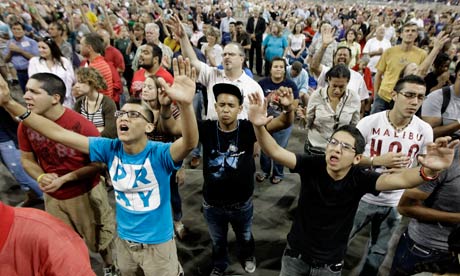
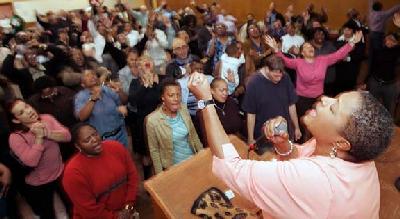
Recently I attended a special prayer service for a friend facing
a terrible cancer diagnosis. With very little notice, more than 40 people
showed up to pray for this dear pastor’s wife (in her backyard since the house
was not large enough). There were people there from at least four different congregations,
including the two largest churches in Beaverton. Yet it did not seem like a
gathering of churches, but simply the one church gathering to pray for a sick family member. There was no posturing, no competition between one congregation’s
50-somethings and another’s 20-somethings, between those from the small
church-plant and those from the mega-churches, but rather deep gut-wrenching compassion
and contending in prayer by all alike as the tears flowed freely.
 I have great hope for this woman’s healing (and the others
facing similar situations) and for the healing of the divided church in our
cities. It is when there is a crisis or suffering that we see that the church
in our community is larger than our smaller gatherings. I have observed that in
a hospital’s Surgery or ICU waiting rooms there is only one church…The
Congregation of the Desperate.
I wonder if our getting to know each other will
happen voluntarily, or only through the furnace of suffering. I prefer the
pain-free approach, of course, but we are all a little too proud to lay down
our own appearance of control without a little persuasion. Maybe Portland’s
problem is too few of the tornadoes or tyrants that force us to look beyond
ourselves…not that I’m askin’.
I don’t think that I
am the answer to the church’s problems, but I believe that I could be part of the answer along with those who
will let me sit with them and get to know them. It starts with listening and friendship.
Not too many takers so far. Dr. Metzger wrote, “In
the midst of tending to one’s own church’s needs, it is important to tend to
the needs of all churches in a community.” This is so true, but only if
they want you to walk alongside them.
What we evangelicals need to repent of, is our sense of
competition with other congregations, our pride in our own congregations, and our
feelings of competent self-sufficiency. We need the humility to ask for help
from each other and the relational closeness to know when another needs help
without having to ask. Let our esteem be in Christ alone not in the façade of our
appearances!
If we need to be moving someone, let it be moving ourselves
closer to each other relationally, linking arms and hearts, keeping in step with the Spirit rather than
the flesh (Gal. 5). Listen to one another, pray with one another, be friends with one another. Then we may see God move in gentle power in our midst... and have to move out into the yard because the house isn't big enough for everyone.

 First, we should not be ready to rise up from talking at some offense and plunge the hidden dagger of our arrogant agenda into our opponent’s heart.

 Other adjectives might include, “Sympathetic” in the sense of “the act or capacity of entering into
or sharing the feelings or interests of another…” without polluting the sacred
space of relationship with our stuff and yet “Sharpening” each other’s understanding (Proverbs 27:17). “Faithful”
might also work very well as a relational anchor that allows us to remain
despite resistance from them or pressure from others urging us to disengage and
draw back.
 What do you think?