Wednesday, January 20, 2016

Leaving the Light On For You: A Response to “Lights Out”

This post is an assigned response to Paul Louis Metzger’s article “Lights Out: Shining a Light on Caring for the Dying in a Multi-Faith World,” which addresses the need for cultural and multi-faith sensitivity on the part of chaplains serving the terminally ill on palliative care teams. The dying process is a time when patients’ desires and as well as those of their immediate families, are to be considered carefully.  Dr. Metzger advocates for a kind and respectful approach and cautions that Gentleness and respect require that we do not force our views on others.”

Please Don’t Point Your Light in My Eyes
Just as having a spotlight pointed at your face is obnoxious, so too some witnessing approaches and methods can cause us to close our eyes tightly. Light can be encouraging, helpful, and even attractive, but when pointed into someone’s eyes, it can also be something oppressive to hide behind. Christ’s light is not to be wielded as a weapon. It helps provide care that shows our faith well, “adorning the doctrines of God” (Titus 2:10), to understand what other people believe, how they are feeling, and why they feel and believe as they approach their death.

While time is short, and the need is urgent, there is no call to be pressing or pressuring on our part—unless it is in prayer. I find that there often comes a new openness to the spiritual realm on the part of the person suffering. This is a great mercy from a loving God. As the things they have trusted in are stripped away, they see their emptiness and begin to search for something, or someone, with enough throw-weight to carry their soul into the next life. So should we! I am reminded of  Paul’s “near-death” experience described in 2 Corinthians 1:8-10,
For we do not want you to be unaware, brothers, of the affliction we experienced in Asia. For we were so utterly burdened beyond our strength that we despaired of life itself. Indeed, we felt that we had received the sentence of death. But that was to make us rely not on ourselves but on God who raises the dead. He delivered us from such a deadly peril, and he will deliver us. On him we have set our hope that he will deliver us again.

As a pastor, my job is different from that of a chaplain…and is unchained from multi-faith restrictions. However, my approach should also be “gentle and respectful” and never forced or coercive, yet neither should it miss the rescue opportunity by being too timid. Dr. Metzger writes,
Yes, as Christians committed to the biblical hope, we long to share about our faith in the eternal security of life with God in the resurrected Jesus through faith in his love poured out by the Spirit (Romans 8:18-39; 1 Thessalonians 4:13-18; Romans 5:5). But hopefully we also desire to live out the biblical exhortation to do for others what we would want them to do for us (Matthew 7:12). If we wish to be treated with respect and not have others force their views on us, no matter how well-intentioned, we should respect them and not force our views on them.

I wholeheartedly agree with this. We do long to share our faith, not to somehow win or control another, but to simply share the blessing we have received. We also agree that no spiritual decision should ever be forced; neither a baptism by Jesuits 500 years ago nor an evangelical’s “sinners prayer” or a Shahada by Muslims today.

Ladybug, Ladybug, Please Don’t Be Offended…but Your House is On Fire
I remember a John Leo column from the early 80s (Newsweek) where he told non-believers that they should not be offended when evangelical Christians witnessed to them, for it was a sign that they really cared. If you believe your neighbor’s house is on fire, you will be motivated by human decency to warn them. Like the person warning residents that their house is on fire, sometimes witnessing is neither subtle nor soft-spoken.  I agree. If we really believe the Bible, we should care enough about our neighbors to tell them.

When I think of watchmen, I think of the well-known passage in Ezekiel 33. A watchman’s job was to warn the city of the approaching danger. However, the responsibility to respond to the warning is on the people of the city, not the watchman. The watchman need not force the city to respond to the coming danger; he gives his observations and leaves the response to the people.
The word of the Lord came to me: “Son of man, speak to your people and say to them,
Jerusalem before dawn
If I bring the sword upon a land, and the people of the land take a man from among them, and make him their watchman, and if he sees the sword coming upon the land and blows the trumpet and warns the people, then if anyone who hears the sound of the trumpet does not take warning, and the sword comes and takes him away, his blood shall be upon his own head. He heard the sound of the trumpet and did not take warning; his blood shall be upon himself. But if he had taken warning, he would have saved his life. But if the watchman sees the sword coming and does not blow the trumpet, so that the people are not warned, and the sword comes and takes any one of them, that person is taken away in his iniquity, but his blood I will require at the watchman's hand.
(Ezekiel 33:1-6)

Delivering My Soul…and Yours
So the trick is to “deliver our soul” (v. 9) by warning those in danger. But there is a catch that I don’t remember noticing before. In verse two, we find that the watchman's role is conditional; it is conferred by the people taking one from “among them” and making “him their watchman.” When we apply this watchman principle to our own lives and ministries (I have, since my name means “watchman”), have we ever stopped to consider whether “my people” have made me "a watchman" for them? Or do we just assume that we can be freelance “watchers and warners” without first earning the relational trust of others? If we don’t listen authentically, how can we ever be “among them” enough to be trusted as a watcher?

I read Metzger’s post as suggesting that we need to be relationally trustworthy before others might ask us for our input into the great crisis moment of their lives. God doesn’t want any to perish (2 Peter 3:9), not even the really bad ones (Eze. 33:10-11). Even so, people die every day, many without really hearing the life-giving gospel of Christ. Could it be that our methods of urgency are too transactional (“Do this...and get that”) to allow others to truly join us (or for us to join them) on a spiritual journey that no person was designed to walk alone? I don’t want to be a roadblock. How about you?

We need boldness—boldness to listen long, to love with the love of Christ who loved us while we were his enemies (Romans 5:6-10, to consider the needs of others more than we impose our own perception of their needs upon them, and that they might see Christ in what we say and do, as well as in what we don’t.

The following poem was written a few years ago in response to my father-in-law’s emergency surgery, his 33-day struggle for life in the hospital’s intensive and critical care units, and his subsequent death. He was not open to discussing spiritual things earlier in his life and would leave the room when others talked about or answered questions about Jesus. However, after his wife died, he stopped leaving the room, but still didn’t participate in any spiritual conversations—until the day he was scheduled for emergency cancer surgery and his ears were opened to hear the voice of the Lord calling him. His transformation stunned us all. The following poem, written in the first-person, was inspired by that process and such scriptures as Matthew 7:1-14 and 19:23-26. I hope it speaks to you today.

The Narrow Gate
Utterly burdened beyond strength
Looking, facing, fearing
Narrow gate’s eye of the needle, knowing
I don’t, can’t, won’t fit.
Despairing painfully of any solution
But pressed, drawn, nonetheless by
God’s possibilities, and
My latent mortality.

Dreadful as death’s door was
From a distance, now
Up close, uncomfortably close,
Squinting against the needle’s eye
Perhaps glimpsing bright sparks beyond,
Through my grimace.

How could I trust,
Transition, from here to there
Through this impossibly narrow
Moment of prolonged surrender?

Yet I am sought, welcomed
Comforted as I hear his voice with
Others he has led this way before.
I reach for the rope
Grace’s already threaded
Sticky scarlet cord grasps me
In suffering’s fellowship.

What is earthly, mean, camelish,
Scraped off, exfoliated, removed,
Wrung out, expressed into a disposable bag,
What was once my focus, now
So much medical waste.
Good riddance.

The brass buttons of my autonomy
Catching on eternity’s door
I fight to free them, until with embarrassment in
Purgatory of my last years, days, 
Giving up, I ask for help
Slowly casting off the uniform of my birth
While putting on that of His
Through learning to love.

My eyes seem to blink away the mist
Suddenly seeing truly
Awesome God
Yet I am not consumed.
What was pressed, pulled through the eye
By the power, possibility of God’s love
Weightier, more expansive
Than I ever was before.

© Greg K. Dueker


We need to leave the light on for others to find their way. May it be the kind of light that draws us near and delivers us all from fear. 

Tuesday, January 12, 2016

The Lord is With You…Yes, You!

Photo by fa-barboza-on unsplash
As followers of Jesus, we celebrate Christmas in remembrance of his birth “long ago in a Galilee far away,” as the internet meme proclaims. Jesus is the One through whom God has revealed his righteousness, worked salvation, and made it known! We cannot help but declare his praise along with the psalmist,


Oh sing to the Lord a new song,
    for he has done marvelous things!
His right hand and his holy arm
    have worked salvation for him.
The Lord has made known his salvation;
    he has revealed his righteousness in the sight of the nations.
He has remembered his steadfast love and faithfulness
    to the house of Israel.
All the ends of the earth have seen
    the salvation of our God.
(Psalm 98:1-3)

Perhaps you heard many Christmas sermons this year, as well as read or listened to plenty of Christmas devotionals. Sure, the decorations are down now, but I would like to consider how the birth of Christ reaches out to the poor, the working poor, travelers, and refugees alike, who too often consider themselves excluded from sharing in the joy of Christ in the church.

I want to share with you the familiar verses from Luke 1-2 and a few simple thoughts that we considered in our Christmas Eve service this year about how to respond when God comes near and begins to reveal his will for your life.

1. “Strange Greetings” (Luke 1:26-29 ESV)
In the sixth month, the angel Gabriel was sent from God to a city of Galilee named Nazareth, to a virgin betrothed to a man whose name was Joseph, of the house of David. And the virgin's name was Mary. And he came to her and said, “Greetings, O favored one, the Lord is with you!” But she was greatly troubled at the saying, and tried to discern what sort of greeting this might be.

Gabriel said to Mary, Greetings, O favored one, The Lord is with you!” (Luke 1:28). The greeting was strange! Mary was “greatly troubled” and couldn’t figure out what kind of greeting this was. Certainly, I would think that angelic greetings would be startling, but Mary was blown away and was trying to read between the lines and reconcile the message with her circumstances…perhaps asking questions such as:
  • What do I have to rejoice about?
  • How could God be with us, a sinful people? How will sin be dealt with?
  • Wait…isn’t this the kind of greeting Gideon received not far from this very spot?
Perhaps you didn’t get that last question, but Mary was well-versed in her knowledge of the Scriptures, and perhaps it was that similarity to Judges 6 that caused her concern as she waited for the other sandal to drop. For those of us without familiarity with the story of Gideon, let’s read Judges 6:11-16:

Now the angel of the Lord came and sat under the terebinth at Ophrah, which belonged to Joash the Abiezrite, while his son Gideon was beating out wheat in the winepress to hide it from the Midianites. And the angel of the Lord appeared to him and said to him, “The Lord is with you, O mighty man of valor.” 
And Gideon said to him, “Please, sir, if the Lord is with us, why then has all this happened to us? And where are all his wonderful deeds that our fathers recounted to us, saying, ‘Did not the Lord bring us up from Egypt?’ But now the Lord has forsaken us and given us into the hand of Midian.” 
And the Lord turned to him and said, “Go in this might of yours and save Israel from the hand of Midian; do not I send you?” 
And he said to him, “Please, Lord, how can I save Israel? Behold, my clan is the weakest in Manasseh, and I am the least in my father's house.” 
And the Lord said to him, “But I will be with you, and you shall strike the Midianites as one man.”

When Israel needed to be delivered from its oppressors, the Lord heard their cry and commissioned Gideon to lead them to victory…beginning with the admonition,  “The Lord is with you…”. Now, do you see why this got Mary’s attention?

Ironically, the Lord was with her, and she was going to carry the child who would be called Immanuel. So what does "Immanuel" mean? It simply means “God with us” (Matthew 1:22-23), and it is the answer to the cry of our heart...individually and collectively, whether we know it or not. As believers, our community comes from the presence of God, as does our witness. It is not based on our personal impressiveness, wealth, or social standing, as the Apostle Paul pointed out to the church in Corinth (1 Cor. 1:26-31).

God is with us. In the incarnation (God the Son coming in a physical body), God has made a permanent link with his creation. The scope of this goes way beyond this short reflection. Suffice it to say, God is all in; he is with us to the end…which is much brighter for his having come to us!

2. Don't Be Afraid (Luke 1:30-31)
And the angel said to her, “Do not be afraid, Mary, for you have found favor with God. And behold, you will conceive in your womb and bear a son, and you shall call his name Jesus. 

This is the second dose of “fear not” in Luke 1 (Zechariah got one). It is rare for an angel to not lead with the “Fear not!” line. Sometimes when God calls us to respond to him in faith, we are afraid, and our fear is quick to make excuses for us:
  • I’m not good enough.
  • I don’t have anything to offer.
  • It is too good to be true for the likes of me.
Well, long ago the Lord spoke through the prophet Micah about a “too little” town that felt how we saw Gideon feel, and perhaps you feel as well…
But you, O Bethlehem Ephrathah,
    who are too little to be among the clans of Judah,
from you shall come forth for me
    one who is to be ruler in Israel,
whose coming forth is from of old,
    from ancient days…
(Micah 5:2)

Does the thought of God speaking to us, average people in the little wooden church by the laundromat in the bad part of town, and calling us to be part of something with cosmic ramifications scare us? Yep…pretty much! But the messenger of God says to us, as to Mary, “Don’t be afraid.” The basis of our courage is the love of God for us and his presence with us!
3. Know the Power of God (Luke 1:34-37)
And Mary said to the angel, “How will this be, since I am a virgin?” 
And the angel answered her, “The Holy Spirit will come upon you, and the power of the Most High will overshadow you; therefore the child to be born will be called holy—the Son of God. And behold, your relative Elizabeth in her old age has also conceived a son, and this is the sixth month with her who was called barren. For nothing will be impossible with God.”

To her credit, Mary didn’t doubt that the Lord could do what he said, nor did she argue over being chosen. Her question was simply because she didn’t understand how the Lord would work it out. It seemed impossible since she was a virgin, but as the angel answered, “Nothing will be impossible with God.” I think we could also say that nothing God has said will fail. This One who was to be born was the power of God working to shepherd and protect his people. He is our peace.

And he shall stand and shepherd his flock in the strength of the Lord,
    in the majesty of the name of the Lord his God.
And they shall dwell secure, for now he shall be great
    to the ends of the earth.
And he shall be their peace.
(Micah 5:4-5a)

Mary took this message at face value, responding, “I am the servant of the Lord; let it be to me according to your word.”

4. Believe What He Says (Luke 1:38, 45)
And Mary said, “Behold, I am the servant of the Lord; let it be to me according to your word.”
“…And blessed is she who believed that there would be a fulfillment of what was spoken to her from the Lord.”

Mary was blessed when she believed what God had said to her. Abraham was similarly blessed. The trick for us average people is to believe, or trust, what God has said in his Word. We want to believe, but sometimes we have to be honest about our doubts. It reminds me of when Jesus came down from the Mt. of Transfiguration and encountered an argument arising from his disciples’ inability to cast out a demon that was convulsing a man’s son. The boy’s father petitioned Jesus,
“But if you can do anything, have compassion on us and help us.” 
And Jesus said to him, “‘If you can’! All things are possible for one who believes.” Immediately the father of the child cried out and said, “I believe; help my unbelief!” (Mark 9:22-24)

Will we respond in faith to the God who loves us and came to earth to show us that he exists and is good?
And without faith it is impossible to please him, for whoever would draw near to God must believe that he exists and that he rewards those who seek him. (Hebrews 11:6)

Jesus is not like some fictional fly-by-the-seat-of-your-pants Aladdin-type asking us, “Do you trust me?” But perhaps we should be a little more like Jazmin, or in this case, like the real-life Mary, and say “Yes!” to him this year. Indeed, we cannot change the world by our own power and plans…but it never was about that. It is about Jesus and the Holy Spirit, who were sent by the Father—God with us. Yes, with us!

If there was one group of people in the dark that night who had no expectation of being included in God’s marvelous plan, it was the shepherds, which leads us to our last point.
5. Tell Others (Luke 2:8-20)
v. 17 "When they saw it, they made known the saying that had been told them concerning this child."
v. 20 And the shepherds returned, glorifying and praising God for all they had heard and seen, as it had been told them.

We can’t have a Christmas message that leaves anyone out. From the oppressed peasant girl giving birth to the Messiah to an old woman who lived in the social shame of failing to give her husband a son and would have thought that it was too late for her to be a part of God’s plan, to simple shepherds who were not even allowed to worship in the temple (for they were considered unclean) now having God come to them that night to announce the good news—what a gift!  And they went and told all that they had seen and heard…who would have thought that they would one day announce the birth of the Good Shepherd!
Arise, shine, for your light has come,
    and the glory of the Lord has risen upon you.
For behold, darkness shall cover the earth,
    and thick darkness the peoples;
but the Lord will arise upon you,
    and his glory will be seen upon you.
And nations shall come to your light,
    and kings to the brightness of your rising…
(Isaiah 60:1-3)

And speaking of gifts, we can’t leave out the Magi who came later,

the wealth of the nations shall come to you.
A multitude of camels shall cover you,
    the young camels of Midian and Ephah;
    all those from Sheba shall come.
They shall bring gold and frankincense,
    and shall bring good news, the praises of the Lord.
(Isaiah 60:5b-6)

Beyond a shadow of a doubt, the Lord loves you—no one is beyond the reach of his plan to fix a broken world. He is our Advocate, our Helper, but he didn’t just come to fix things; he came to dwell with us!

Perhaps you may still be puzzled like Mary was about this whole incarnation thing. Let me share a helpful story with you that I first at Christmas in 2001.

----------------
THE MAN AND THE BIRDS (written by Paul Harvey)


Now, the man to whom I’m going to introduce you was not a Scrooge. He was a kind, decent, mostly good man, generous to his family and upright in his dealings with other men. But he just didn’t believe all that incarnation stuff which the churches proclaim at Christmas time. It just didn’t make sense, and he was too honest to pretend otherwise. He just couldn’t swallow the Jesus story, about God coming to earth as a man.

“I’m truly sorry to distress you,” he told his wife, “but I’m not going with you to church this Christmas Eve.” He said he’d feel like a hypocrite and that he’d much rather just stay at home, but that he would wait up for them. And so he stayed, and they went to the midnight service.

Shortly after the family drove away in the car, snow began to fall. He went to the window to watch the flurries getting heavier and heavier, and then went back to his fireside chair and began to read his newspaper. Minutes later, he was startled by a thudding sound. Then another, and then another. Sort of a thump or a thud. At first, he thought someone must be throwing snowballs against his living room window.

But when he went to the front door to investigate, he found a flock of birds huddled miserably in the snow. They’d been caught in the storm and, in a desperate search for shelter, had tried to fly through his large [picture] window. Well, he couldn’t let the poor creatures lie there and freeze, so he remembered the barn where his children stabled their pony. That would provide a warm shelter if he could direct the birds to it.

Quickly, he put on a coat and galoshes and tramped through the deepening snow to the barn. He opened the doors wide and turned on a light, but the birds did not come in. He figured food would entice them in. So he hurried back to the house, fetched bread crumbs, and sprinkled them on the snow, making a trail to the yellow-lighted, wide-open doorway of the stable. But to his dismay, the birds ignored the bread crumbs and continued to flap around helplessly in the snow.

He tried catching them. He tried shooing them into the barn by walking around them, waving his arms. Instead, they scattered in every direction, except into the warm, lighted barn. And then, he realized that they were afraid of him. To them, he reasoned, I am a strange and terrifying creature. If only I could think of some way to let them know that they can trust me – that I am not trying to hurt them, but to help them. But how, because any move he made tended to frighten and confuse them. They just would not follow. They would not be led or shooed because they feared him.


“If only I could be a bird,” he thought to himself, “and mingle with them and speak their language. Then I could tell them not to be afraid. Then I could show them the way to the safe, warm . . .  . . .  . . . to the safe, warm barn. But I would have to be one of them so they could see, and hear, and understand.”

At that moment, the church bells began to ring. The sound reached his ears above the sounds of the wind. And he stood there listening to the bells – listening to the bells pealing the glad tidings of Christmas. And he sank to his knees in the snow.


Tuesday, January 5, 2016

Autopia, or Searching for Spock?

This post is an assigned response to Dr. Paul Louis Metzger’s blog post, Should Ethics Be “Biologicized”? What Might that Mean for Eugenics? which deals with those who see biological studies—rather than philosophy—as the true authority on ethical behavior as well as those who advocate for democratized eugenics. While this is not a normal topic you might see on my blog, it is an important issue to consider. 

Dr. Metzger quotes Harvard University’s Edward O. Wilson as supporting sociobiology, “the systematic study of the biological basis of all social behavior.”[1] So is all of our social behavior, including ethical decisions, the result of our biology? I am open to considering that the answer may not be as obvious as some might think. The psalmist in praising God wrote,
For you formed my inward parts;
    you knitted me together in my mother's womb.
I praise you, for I am fearfully and wonderfully made.
Wonderful are your works;
    my soul knows it very well. (Psalm 139:133-14)

Certainly, we are complex and well-designed creatures. As our knowledge of the human body has progressed we have begun to see a mind-boggling level of complexity. In many cases, the complexity of the human body is irreducible which means that the system/organ/structure in question had to be designed and deployed intact and could not have evolved from some less complex state. Structures such as the human appendix once considered vestigial (mostly useless) by evolutionists have now in many cases be found to serve important functions. How much information is contained in our DNA? 

Perhaps you remember one of the original rides in Disney's Tomorrowland was called Autopia (1955). It involved being strapped into a small, smelly, slow, gas-powered car and driving along miniature faux-freeways while being cautioned not to bump into the car in front of you [which was one the few things that made the ride interesting]. Starting in 1965, the cars were all mounted on a rail or concrete center curb that kept you in your lane and reduced collisions. No matter how you turned the wheel you still followed the rail to the end of the ride, in fact, the steering system barely worked at all and at best allowed you to finish the ride more quickly (by reducing friction against the guide rail).

Is it possible that we have some kind of pre-programmed, Autopia-style ethical guide from which we cannot deviate? One passed genetically from our parents and ancestors? Is this guide for our social behavior something that has evolved or was it designed? Is it violable or inviolable? Is it possible that there are biological circuit boards, related to our ethical behavior, that were designed and programmed by a loving Creator? While I don’t want to rule out that possibility, such a record would certainly have been corrupted by the fall (Genesis 3). If micro-evolution (variations within a species) always involves a loss of preexisting genetic material, how would a biologicized ethical system be any different? I cast my vote for the philosophical and theological disciplines being better suited to watch over and determine how ethical our social behavior is than that of evolutionary biology. Yet I might be surprised.

What about those who drive too slow, who impede the pleasure of others? Should they be removed from the ride, or, to borrow a reality-show metaphor, be voted off the island? Who decides? If ethics are pre-programmed then the resulting democratically determined eugenics would be in keeping with such evolutionary-developed ethics. This is frightening.

Dr. Metzger shares this concern, one of my fears in this democratic country is that we champion a form of utilitarianism, which entails the greatest amount of pleasure for the greatest number of people.” Utilitarian ethics, while effective in getting things done, are not kind to those whose existence stands in the way of the comfort and pleasure of the majority and is judged expendable. He cautions that the elderly, prisoners, and other minority communities, would be at risk. This is no minor issue as the masses seem to become increasingly self-focused and unwilling to sacrifice for others.  I totally agree with Metzger’s statement that,
Wilson’s discussion of eugenics in On Human Nature evinces not the prejudice and racism of which he had been accused, but rather a naïveté about the prospect that science will be guided by the essential goodness and rationality of mankind. Not only does Wilson display too much confidence in science’s ability to control human genetics safely, he also believes that adherence to the democratic process will eliminate the potential for abuse.
Scientists and structures of power are not as good as all that. In addition, democratic nations are not immune from racism, ethnic cleansing, infanticide, euthanasia, forced sterilization, and involuntary human testing of new drugs. Large governments also tend to be heavy-handed in suppressing those most immune to their propaganda and most independent from their entitlement programs.

It is the work of a corrupt ethic to demand the sacrifice of another to further one’s own advantage. Rather, it is the work of love to set aside the natural inclination of self-preservation for the benefit of another. I remember the classic goodbye from Star Trek II: The Wrath of Khan, after Mr. Spock entered an area flooded with deadly radiation to save his crewmates at the cost of his own life,
Spock: Do not grieve, Admiral. It is logical. The needs of the many, outweigh...
Kirk: The needs of the few.
Spock: Or the one...

This logic is certainly utilitarian, but it doesn’t impose the demands of such reasoning upon another. It is a cruciform utilitarianism that lays down one’s own life and rights for those of others—as many others as possible. This is certainly not what would occur through democratic eugenics unless it was in the form of guilt-tripping the minority to “do their duty” to sacrifice for the majority. Such coercion would again reveal an ethical corruption was in play. [Such social pressure to conform also brings to mind Shirley Jackson's 1948 short story, The Lottery, and the 1969 film based on it. The line, "Hesh-up Tessie, be a good sport!" is a scene I haven't forgotten since I first saw it in Elementary School.] 

In the movies, Admiral Kirk learned a lesson through this and subsequent events that led him to risk his "everything" in the sequel for the life of the “new” Spock. Was this biological or something more? Later in explaining why he was willing to lose his ship and even his own son to save Spock, Kirk reversed Spock’s reasoning, Because, the needs of the one... outweigh the needs of the many.Yet, even in this reversal, there was no top-down self-serving demand upon another. This is just a scene from a sci-fi movie, not actual history, but I wonder if as a metaphor it might provide a challenge to those of us safely situated in the dominant culture.

What if we began to see the marginalized and devalued as more worthy of being saved than we are of being comfortable? What if the structures of power oppose such advocacy and shared honor? There is more on the line than we think. Kirk, for all his flaws, might have been on to something as we see in his encounter with the grateful Ambassador Sarek (Spock’s father),
Sarek: Kirk, I thank you. What you have done is...
Kirk: What I have done, I had to do.
Sarek: But at what cost? Your ship. Your son.
Kirk: If I hadn't tried, the cost would have been my soul.

Certainly, those immersed in eugenics would fail to recognize that all people (regardless of race, class, education and intelligence, attractiveness, physical capabilities, and overall health) are made in the image of God. If we are not made in the image of God what could we possibly mean when referring to the soul? The psalmist quoted above concluded his song with a request that the Lord, would not allow him to continue in corrupted thinking, social behavior, or ethicizing...
Search me, O God, and know my heart!
    Try me and know my thoughts!
And see if there be any grievous way in me,
    and lead me in the way everlasting! (Psalm 139:23-24)

Disney's Autopia may be OK for a while, all it takes is putting your foot on the gas and going with the flow, but it is not really driving and gets old in a hurry. It is certainly not the “way everlasting” although the lines to get on the ride may have seemed like it! We need to be in a loving relationship with our Creator-Redeemer for he will not only lead us well, but he will make us new!
  
“Therefore, if anyone is in Christ, he is a new creation. The old has passed away; behold, the new has come. (2 Cor. 5:17) 


[1] E. O. Wilson, Sociobiology: The New Synthesis, 25th Anniversary Edition (Cambridge, MA: The Belknap Press of Harvard University Press, 1975/2000), page 4.

Tuesday, December 15, 2015

Driving in the Fog: An Advocacy Metaphor

Recently, as I was driving to work, I was surprised by the fog between the towns along the way. After a long, dry, often hot summer, it reminded me that the weather is changing, and one aspect of fall driving in the Northwest is fog. We hear a lot about the hazards of winter driving, but honestly, when we have a snow or ice “event,” most people around here just stay home. What you hear less about is the danger of driving in fog. Experts suggest several things we can do to improve safety when we have to drive through fog. After reading a number of these lists of safety tips and driving directions, I have discerned a metaphor that may help us as advocates and cross-cultural ambassadors for Christ.

Advocating for/with others is in many ways like driving in the fog.

In any given situation, we may not know everyone’s backstory or cultural conditioning. It also seems that we rarely hear both sides of the story or systematically analyze all the contributing factors. Our understanding of the situation is actually far more limited than we realize. Sometimes, when we might not know what to do, we follow others who seem to have a clue. Unfortunately, they might be just as blind as we are. In such situations, our hurry to do something might cause more damage than not doing something. Let’s take a look at the common safety suggestions for driving in the fog, but let’s think about how our advocacy could benefit from such an approach.

Slow Down

The consensus “#1 fog-driving safety tip” is to slow down. As the range of our vision decreases, so does the time we have to react and adjust to curves, cows, and other cars. We will also need to keep an eye on the speedometer since “we may lose visual cues as to how fast we are going.” This is true for ministry leaders as well as for driving. In seasons of cultural fog and reduced understanding of what is going on and what lies ahead, we need to slow down. Just as driving into a ditch or running into another car won’t get us where we need to be any faster, so too our rushing ahead with our plans without asking the hard theological “Why-type” questions will not save us time in the long run…and may be quite dangerous.  If we are going too fast, we risk collisions—even with those going the same direction, who might have been our greatest allies.
    “The heart of the righteous ponders how to answer,
         but the mouth of the wicked pours out evil things.”
(Proverbs 15:28)

    “Before destruction a man's heart is haughty,
         but humility comes before honor.
    If one gives an answer before he hears,
         it is his folly and shame…
    The one who states his case first seems right,
         until the other comes and examines him.”
(Proverbs 18:12-13, 17)
Use Our (Low-Beam) Headlights

It is important to make sure your headlights are on in foggy weather for two reasons. First, we want to see where we are going. Second, we want others to be able to avoid running into us. However, our temptation when visibility is limited is to turn on the high-beam lights in hopes of seeing farther. However, with low, thick fog, this will actually impair our vision as the light is reflected back off the fog into our eyes. High beams also make it harder for other cars to see where they are going. The low-beam headlights will not reflect as much glare back into our eyes, nor blind other drivers.

This high-beam temptation is like when we think too much of ourselves and our opinions during a time when we do not have a clear picture of our context or the path forward. Such confusing times come to us all, perhaps more frequently than we would like to admit. However, when we begin to consistently apply the Word of God to the situation, we should be able to make slow, steady progress. The Bible teaches that we are not to think too highly of ourselves…for pride, like high beams, can tend to make us blind to potential dangers as well as endanger others. Instead, we are challenged to consider others more highly than ourselves, to bear one another’s burdens, and to follow the low-beam attitude of Jesus Christ as described in Philippians 2:3-11,

Do nothing from selfish ambition or conceit, but in humility count others more significant than yourselves. Let each of you look not only to his own interests, but also to the interests of others. Have this mind among yourselves, which is yours in Christ Jesus, who, though he was in the form of God, did not count equality with God a thing to be grasped, but emptied himself, by taking the form of a servant, being born in the likeness of men. And being found in human form, he humbled himself by becoming obedient to the point of death, even death on a cross. Therefore God has highly exalted him and bestowed on him the name that is above every name, so that at the name of Jesus every knee should bow, in heaven and on earth and under the earth, and every tongue confess that Jesus Christ is Lord, to the glory of God the Father.
Use Fog Lights… If You Have Them

Some vehicles are equipped with special fog lights that are low to the ground and are designed to better reveal the lines on the road and not add to the glare in your eyes. Such lights help us to find our way not by seeing a mile down the road, but by helping us to see the next few yards. King David wrote, Your word is a lamp to my feet and a light to my path.” (Psalm 119:105) The type of oil lamp this refers to doesn’t provide light to see far away, but gives illumination for us to see where to place our feet and take our next steps. In times of fog, we need to stay in the Bible, allowing it to illuminate not only our path but the condition of our heart (James 1:22-25; Heb. 12:12-13).
Follow others, but not too closely

Just as drivers in foggy conditions might “be tempted to drive more closely to the car in front of you to keep it in sight” the advocate can begin to rely on the experience and methodology of another, the preacher can become reliant on podcasts of other preachers instead of developing a listening ear for the contextual clues the Lord gives when we slow down and listen. It helps to have mentors and inspirational people who speak into our lives and ministries, but following too closely without being able to see the road for ourselves may end up with both of us in the ditch (Matt. 15:14).
There is one person to follow closely in our fog, and that is the Lord himself. As we draw near in prayer and in reading his Word, the Bible, he will lead us and turn the darkness to light.

And I will lead the blind
    in a way that they do not know,
in paths that they have not known
    I will guide them.
I will turn the darkness before them into light,
    the rough places into level ground.
These are the things I do,
    and I do not forsake them. (Isaiah 42:16)

Turn On the Wipers and Defroster

Always use your windshield wipers and defrosters in fog to help you see and reduce glare from the headlamps of oncoming vehicles. Sometimes we don’t notice that our vision is not as clear as we think until the lights of another car reveal it. Running the defroster will clear the fog on the inside of the window, and the wipers will help clear the outside. In this part of the country, the wind usually scours out the fog, but it is in times of cold and calm (or atmospheric inversion) that the fog thickens. Similarly, a kingdom advocate should regularly allow the Holy Spirit to blow the internal fog away and wipe the outside in honest confession and repentance in response to the Scriptures. It is the internal fog that makes us ineffective and unfruitful.

For this very reason, make every effort to supplement your faith with virtue, and virtue with knowledge, and knowledge with self-control, and self-control with steadfastness, and steadfastness with godliness, and godliness with brotherly affection, and brotherly affection with love. For if these qualities are yours and are increasing, they keep you from being ineffective or unfruitful in the knowledge of our Lord Jesus Christ. For whoever lacks these qualities is so nearsighted that he is blind, having forgotten that he was cleansed from his former sins. (2 Peter 1:5-9)
Roll Down the Windows

Some say that if you roll down the windows at slower speeds, you will be able to hear what’s happening around you (if you turn your music down), which is important when your visibility is reduced. If you hear any suspicious noises, such as squealing or crunching, safely brake and pull to the side of the road. If you have a passenger, rolling down their window may help them better see the fog line and edge of the road. It is all about using all your senses to help stay on the road and avoid hitting others who may have stopped. As ministers and advocates, we will need to be spiritually attuned, "watching in prayer" and not merely mentally engaged (Eph. 6:18-19; 1 Peter 5:7-9).

Follow the Fog Line (the Right-Side Pavement Line)

When visibility is reduced, use the white line on the right-hand side of the road to guide you. It is natural for our eyes to be drawn towards the lights of oncoming cars, but we must resist this, for it impairs our vision once they pass, and it will tend to draw us closer to the oncoming traffic. The fog line is on the right side of the road for just such a time as this. When we are unsure of the future, remember the clear boundaries for our lives and ministries that the Lord has given to us. There are lots of Biblical lists that are very clear, and then there is Colossians 3:17 (look it up), which, if understood, basically says that Jesus’ attitude, character, and teaching should be the fog line of our life. The question is not, “Where did that car in front of me go?” but “Where does that white line say I should go?” 

“Be watchful, stand firm in the faith, act like men, be strong. 
 Let all that you do be done in love.” (1 Cor. 16:13-14)

Don’t Stop On the Road

One of the most annoying things about winter driving in Portland is that when it snows or there is ice on the road, hundreds of people abandon their cars right in the middle of the major roads. This is crazy, right? At least in the brightness of our light snow, you can usually see the stopped cars, but in the dark fog, stopping on the road can be disastrous, resulting in being rear-ended and causing a multi-vehicle accident. Some of the largest and most tragic freeway pileups happen in fog or smoke. Experts suggest that if we have to stop that we pull over to a safe area, completely off the road, and turn on our hazard lights.
“And let us not grow weary of doing good, 
for in due season we will reap, 
                          if we do not give up.” (Gal. 6:9) 

In advocacy, as in all ministries, we should not just quit and walk away for that will potentially harm us and others. Better to consider the needs of others and get out of the way and wait until we can, in faith, move forward again (Gal. 6:2).


Turn On Your Hazard Lights

If we need to pull off the road, multiple sources remind us to “turn on your emergency flashers or hazard lights.” We need to do this “so other drivers will know you are parked and won’t try to follow you.” There are times when we just need to be honest and say, “Don’t follow me…I have no idea where I am going!” Such an attitude is much better than leading other people into a ditch.

It is not a cultural value for ministers to admit that they can’t see and need to “pull over” due to either the fog of changing culture, the dust of swirling circumstances, or the blinding smoke of systemic burnout. It may take courage to pull over and turn on the hazard lights, but it is an act of kindness and is helpful to others. When was the last time we stopped and let Jesus advocate on our behalf?
My little children, I am writing these things to you so that you may not sin. But if anyone does sin, we have an advocate with the Father, Jesus Christ the righteous. (1 John 2:1)

No Road Rage

Has impatience or hatred crept into our advocacy? This can easily happen. When we are dealing with people who have been objectified or oppressed, we may begin to desire the worst for their oppressors; yet if our love for one person turns into hate for another, then we are in a blinding fog and don’t realize our own danger.
But whoever hates his brother is in the darkness and walks in the darkness, and does not know where he is going, because the darkness has blinded his eyes.” (1 John 2:11)

Few things could be scarier than to continue in such self-deception as that which Jesus called out in the Laodicean church, “For you say, I am rich, I have prospered, and I need nothing, not realizing that you are wretched, pitiable, poor, blind, and naked.” (Rev. 3:17) Instead, may we cry out like Bartimaeus, “Rabbi, let me recover my sight.” (Mark 10:51).

Bringing It Home

Simple advice for driving in the fog is remarkably applicable to the life of an advocate, whether personal, governmental, through a non-profit agency, or even in a church setting. Go slow, assume that you see less clearly than you think you do, communicate well with others both about what you are doing and what you are not doing, ask for help, don't neglect the spiritual dimension, stick to your core values, and don’t be afraid to pull over and wait for your vision to clear.

Thursday, December 3, 2015

Darwin, Dawkins, & the Darkness in my Soul

This post is an assigned response (in a course on Christian Advocacy) to Social Darwinism, Richard Dawkins, and Down syndrome by Paul Louis Metzger 

In his post, Dr. Metzger treads dangerously close to the swamp of misunderstanding by writing semi-favorably about Darwin and Dawkins. He could be misunderstood by those on either side depending on their biases. However, in the process, he makes one very good point. He writes,
Why all this fuss on the need to understand Darwin and Dawkins on their own terms?
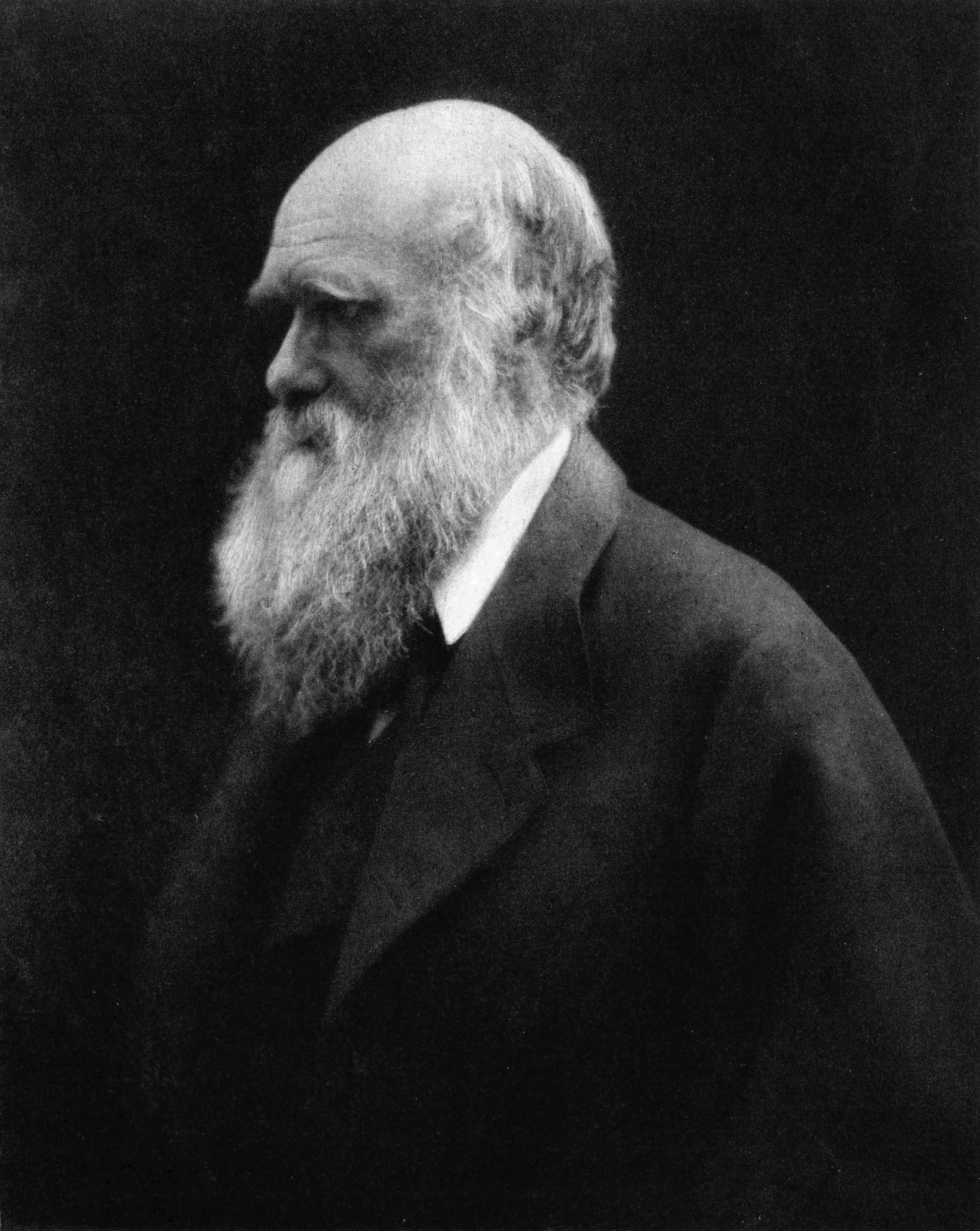
Charles Darwin
Generally, conservative Christians do not show much love for Darwin or Dawkins. Still, we need to practice the Golden Rule (Matthew 7:12) and do to others what we would want them to do to us. We should try and interpret their claims in keeping with their intended aims rather than with how we might wish to interpret them for partisan purposes, just like we would want others to interpret our positions as we intend them. Take for example the accusations and misperceptions of others concerning the early church, where the church’s critics falsely claimed that Christians were engaged in cannibalism and orgies in their love feasts. Such accusations and misunderstandings hurt the church’s witness. Conservative Christians who take seriously the Golden Rule yet who are critical of Social Darwinian thought should be especially careful about not distorting the positions of others, including an atheist like Dawkins. After all, Christians committed to biblical absolutes don’t believe anything goes for the sake of the survival of our particular Christian species.

Do we interpret the claims of those with whom we disagree “in keeping with their intended aims” instead of how they best fit into our talking points? I hope so. Metzger’s appeal to “the Golden Rule” carries more weight than we might want to acknowledge. As with the freedom of speech and the freedom of religion, there needs to be equality under this rule. We need to exegete their work within their actual context no more, no less.

While I disagree with many of Darwin and Dawkins’ presuppositions, conditions, and conclusions I see no need to demonize them. We should live by an ethic such as that tweeted recently by Glenn Burris, "Never express hate on behalf of the God of love."
I would do well to consider their stories, to listen to them in their own words, to hear their own stated purposes. In addition, I am thankful for the added understanding of their positions that Dr. Metzger's post supplies… but in the end, Darwin’s theory and available evidence fail to adequately answer questions about the transitions of “life from non-life” and of one species to another (macroevolution). Dawkins’ utilitarian approach to morality is also inadequate in caring for the marginalized and powerless…for whom a utilitarian ethic—no matter its root—will always bring oppression and further powerlessness.

I appreciate my friend Becca McMartin’s comment on the original blog,
While Dawkins' utilitarian standard of happiness sounds good at first, it seems to create more problems than it solves. What is happiness? How is it judged? Who decided? Is it possible to predict the amount of happiness and act preemptively? Is happiness really the point of life? There are no easy answers.
It seems that...
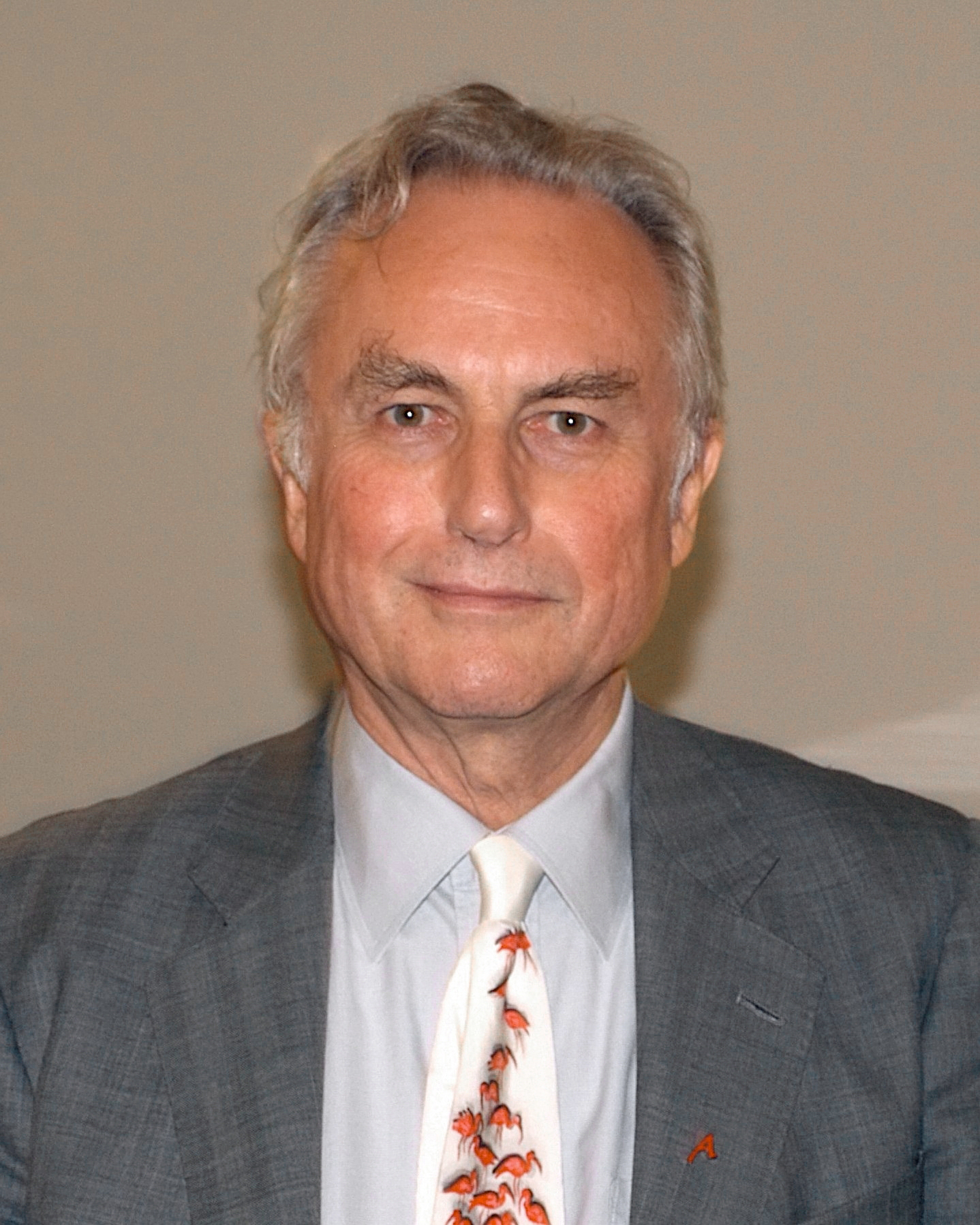
Richard Dawkins
  • One man replaces God the Creator with time and chance and hopes for the best. 
  • The other replaces God the Judge with his own subjective matrix of happiness and suffering and judges as he feels fit. 
Both academic considerations are tragic and have led to untold suffering through the application of their ideas to policies and processes that have real-world consequences. Yet, to be honest, are we any different? Do we not all too frequently do the same things in our own hearts and lives? Do our closet motivations and classroom ideas come with significant collateral damage for others?
  • Do we call God Creator and then treat resources—both environmental and human—as though they were our own possessions?
  • Do we speak of a Righteous Judge and a Coming King, yet sacrifice the happiness and increase the suffering of others for the sake of our own comfort and convenience? We are inherently selfish, and apart from a completely hedonistic motive might settle for a utilitarian approach that validates our collective ego and those in power rather than truly valuing everyone. But to set aside our own happiness for that of another is indeed a challenge.
I hope not, but know that too often this is the case. In our hearts, we turn away from God and seek to build a framework to sustain us in our darkness and rebellion instead of abiding in the love of God. Sometimes it is in a macro (very public) way, and other times it is in a micro (private and internal) way. No matter, the darkness is shockingly real. 

Be appalled, O heavens, at this;
    be shocked, be utterly desolate, declares the Lord,
for my people have committed two evils:
they have forsaken me,
    the fountain of living waters,
and hewed out cisterns for themselves,
    broken cisterns that can hold no water.
(Jeremiah 2:12-14)

Yes, I am thankful for this opportunity to better hear others’ thoughts in their own words. But even more, I am thankful for the opportunity they provide for me to search my heart for where I manifest such fallen thinking and actions…so that I might repent of my hewing and seek God who alone is good to all.

The Lord is gracious and merciful,
    slow to anger and abounding in steadfast love.
The Lord is good to all,
    and his mercy is over all that he has made…
The Lord is righteous in all his ways
    and kind in all his works.
(Psalm 14:8-9, 17)

And without faith it is impossible to please him,
                for whoever would draw near to God 
must believe that he exists
              and that he rewards those who seek him. (Hebrews 11:6)